AsianScientist (Jun. 08, 2026) – For much of the history of modern oncology, the biggest advancements in cancer care have largely been shaped by research in the West. Today, clinicians across Asia are confronting a different reality that is driving new research in oncology: younger cancer patients, distinct genetic profiles, and healthcare systems at varying levels of maturity.
In Singapore alone, nearly 5,000 people under 40 years old were diagnosed with cancer between 2019 and 2023, according to data from the Singapore Cancer Registry. At the same time, Asia’s patient populations continue to be largely underrepresented in global medical research, with data sets scarcely reflective of the region with the world’s largest cancer burden. This raises urgent questions about how scientific advances can be translated meaningfully across diverse regional settings.
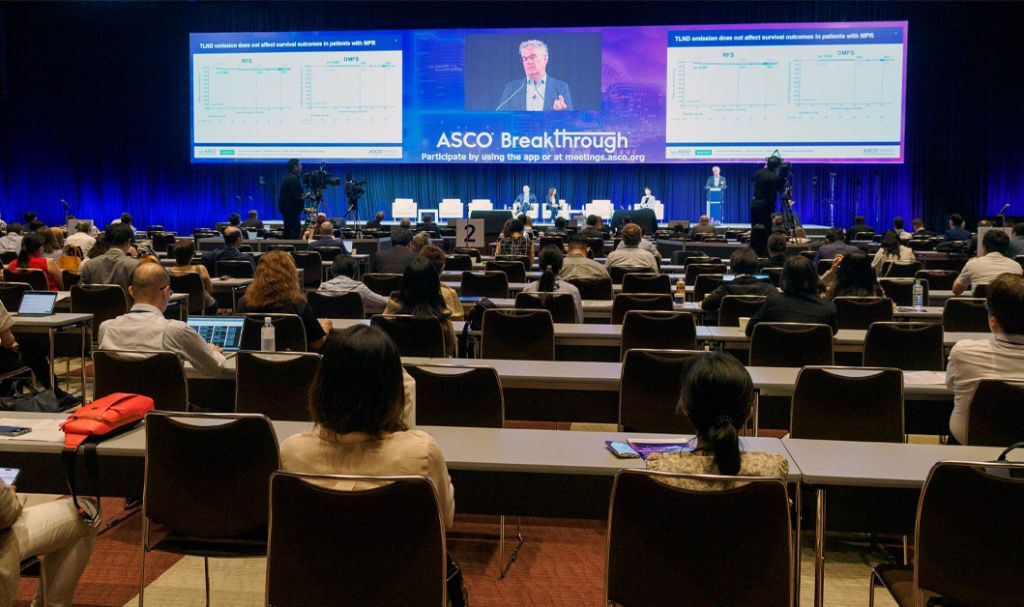
These questions, challenges, and opportunities are at the forefront of the American Society of Clinical Oncology (ASCO) Breakthrough conference.
Asian cancer research will take center stage at 2026 ASCO Breakthrough held in Singapore from June 25 – 27, 2026.
Ahead of the conference, Asian Scientist Magazine spoke to 2026 ASCO Breakthrough Program Committee Chair Dr. Yun Yen of Taipei Medical University, and Co-Host Representative Dr. Eileen Poon from the Singapore Society of Oncology (SSO) and the National Cancer Centre Singapore (NCCS).
Oncology: a fast-moving field
Oncology research and treatment is evolving at an extraordinary pace, with the last few years introducing several new treatment modalities, including highly specific antibody-drug conjugates (ADCs).
Yen explains that ADCs target cancer cells only, leaving healthy cells unaffected, unlike traditional chemotherapy in which drugs can damage healthy, non-cancerous cells—offering better treatment outcomes without detrimental side effects. With its growing adoption, ADCs will be a relevant area of focus at the meeting, with researchers discussing applications for ADCs in lung and breast cancers, and the development of ADCs in China.
In Singapore, Poon shares advances in bispecific antibodies and chimeric receptor (CAR) T-cell therapy—also highly specific treatment options. However, she particularly stresses Singapore’s role as a window to Asia where international research teams leverage Singapore’s trained talent pool, strong infrastructure, and diverse population for global trials.
Both Yen and Poon also highlight the impact artificial intelligence (AI) has in the field across patient care, diagnostics, imaging, and drug development—reducing both the time and costs of typically laborious and expensive processes.
But for AI to be effective, it must be trained on robust and accurate data.
The global evidence base guiding cancer treatment was not built on Asian populations. The deadliest cancers in Asia such as liver cancer, cholangiocarcinoma, and cervical cancer rank very differently in global data.
For instance, lung cancer in Asian patients more commonly carries mutations in a gene called EGFR. These mutations influence the effectiveness of anti-cancer drugs.
“We need our own longitudinal data. Not to abandon established guidelines, but to know how they actually apply here,” said Poon.
Patient education as a top priority
Poon, who will present on patient-centered care at the conference, advises patient caution when using AI. She mentioned that some patients arrive at her clinic armed with AI-generated information. Some of it is accurate, but not all of it applies to them. Typically, this complicates conversations with patients.
“Medicine is not like a cookbook,” Poon said. “The same diagnosis in two patients can demand entirely different approaches.”
Her view is that AI must support the clinician but not replace their judgment. This especially applies to geographies in Asia, which may be at varying levels of maturity when it comes to AI adoption and digitalization.
“AI can both be a boon and a bane in clinical settings, so it must be moderated,” she added.
For example, when used to review reports and identify patterns, AI tools can point towards specific reports that may be anomalous and require more attention. AI tools can also shorten the time needed to manually extract manuscripts and abstracts when clinicians conduct literature searches on certain topics.
Despite the potential benefits, Poon emphasizes the role that a clinician’s experience and judgment plays. “There is always the caveat that AI can be wrong,” she said. “With better data and training, AI can help identify patterns, but it should be used as a first cut and with a discerning eye.”
Breakthroughs begin at Breakthrough
2026 ASCO Breakthrough serves a unique purpose from ASCO’s Annual Meeting in Chicago. It carries the same collaborative spirit and expert oncologist community unique to ASCO meetings, while focusing on diseases, populations, and questions that are specific to the Asia-Pacific region.
Early-career researchers can have direct access to world-leading experts like Yen and Poon. At Breakthrough, close conversations can fuel better research outcomes and spark collaborations that drive improvements in cancer care.
“You will meet true global experts and talk to them directly,” said Yen.
Poon advises participants to read the abstracts, find fellow healthcare professionals that share similar research areas, and start conversations on ground at the meeting.
Beyond hearing the latest scientific advancements, conferences create rare opportunities for junior investigators to engage directly with leading senior researchers who can help sharpen hypotheses, strengthen study design, and situate local findings within the global oncology landscape.
“Meetings like Breakthrough can facilitate closer communication and bridge knowledge from different parts of the world,” said Yen. “A greater focus on Asian challenges and opportunities can go a long way in advancing implementation science, and if attendees use this opportunity to participate, they will find a wealth of knowledge that can be directly helpful for their daily practice.”
Find out more at breakthrough.asco.org. Register today and secure your spot.
—
Source: American Society of Clinical Oncology
Disclaimer: This article does not necessarily reflect the views of AsianScientist or its staff.