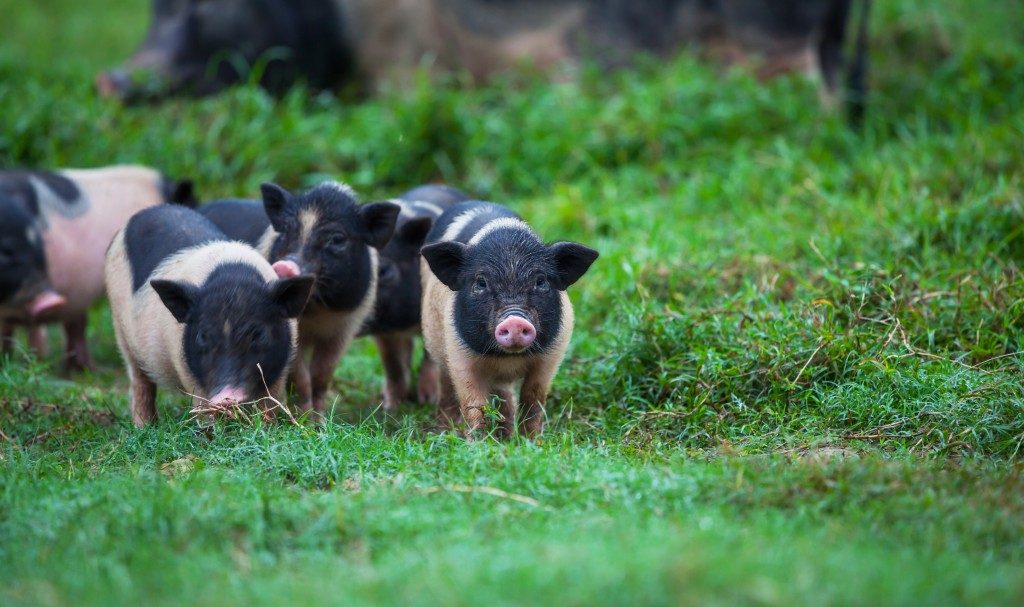
AsianScientist (Mar. 24, 2026)–When the Fukushima Daiichi Nuclear Power Plant accident forced residents to evacuate in 2011, abandoned farmland and forests became an unexpected ecological laboratory. Domestic pigs left behind on farms escaped into the wild, where they encountered and interbred with native wild boar.
Hybridization between domestic animals and wildlife is a growing concern worldwide, particularly as feral pigs and wild boar increasingly overlap. Such hybridization has often been linked to population growth and ecological damage.
Now, more than a decade later, scientists have used this unusual event to study what happens when domestic animals hybridize with their wild relatives. The study, led by Professor Shingo Kaneko of Fukushima University, Japan, with co-author Donovan Anderson of Hirosaki University, Japan, published in the Journal of Forest Research, analyzed how hybrid populations evolved after the accident. The researchers found that pig mothers passed on a key trait – rapid, year-round reproduction – that sped up generational turnover in wild boar populations.
“While it has been previously suggested that hybridization between rewilded swine and wild boars can contribute to population growth, this study demonstrates that the rapid reproductive cycle of domestic swine is inherited through the maternal lineage,” explained Kaneko.
Faster breeding, faster genetic turnover
Domestic pigs reproduce much more frequently than wild boar, which typically breed once a year. The study shows that this trait persisted after escape and was passed down through maternal lineages, leading to faster generational turnover and the rapid dilution of pig nuclear genes through repeated backcrossing with wild boar.
To investigate, the team analyzed mitochondrial DNA which is inherited from the mother, alongside nuclear DNA markers from 191 wild boar and 10 domestic pigs collected between 2015 and 2018. Using population genetics models, they estimated the number of generations since hybridization began and the proportion of domestic pig ancestry remaining in the animals.
The results were surprising. Wild boars carrying pig mitochondrial DNA actually had less pig-derived nuclear DNA than hybrids with wild boar maternal lineages. Many individuals with pig maternal ancestry were already more than five generations removed from the original crossbreeding event.
This pattern suggests that the inherited fast reproductive cycle allowed hybrid populations to pass through generations quickly. Repeated backcrossing with wild boars diluted pig genes rapidly, even though the maternal lineage persisted.
“We hypothesized that the domestic swine’s unique trait, a rapid, year-round reproductive cycle, might be the key,” Anderson said.
Implications beyond Fukushima
Kaneko emphasized that Fukushima’s circumstances were exceptional. The sudden absence of human activity created conditions that allowed wild boar populations to expand rapidly. At the same time, maternal inheritance of accelerated breeding played a contributing role in the speed of genetic introgression.
Moreover, the findings are not limited to Fukushima. “This mechanism likely occurs in other regions worldwide where feral pigs and wild boars interbreed,” said Anderson.
Beyond advancing fundamental understanding of wildlife biology and genetics, the research has practical implications for managing invasive species.
“The findings can be applied to wildlife management and damage control strategies for invasive species,” Kaneko explained. By identifying hybrid individuals with particular genetic backgrounds – especially those carrying pig maternal lineages – authorities may be able to develop more targeted strategies to control populations before they expand rapidly.
As feral pigs continue to spread worldwide, understanding how maternal lineage shapes genetic change may become an increasingly important tool for conservation and wildlife management.
Source: Fukushima University; Image: kamchatka/Freepik
The stusy can be found at Maternal lineage of rewilded swine in Fukushima contributes to faster introgression in wild boar populations
Disclaimer: This article does not necessarily reflect the views of AsianScientist or its staff.