AsianScientist (Feb. 02, 2026) – Conversation, collaboration and curiosity have steadily navigated almost all fields of scientific research through centuries of geopolitical change and technological advancement. In an age of generativeAI and complex international relations, these pillars of science remain a north star for young researchers.
“We’ve brought together a community of passionate individuals, motivated by the pursuit of knowledge to exchange ideas and build new partnerships,” said Professor Aaron Thean, Deputy President (Academic Affairs) and Provost, National University of Singapore, at the opening ceremony of the Global Young Scientists Summit (GYSS) 2026. “This is needed to shape our future.”
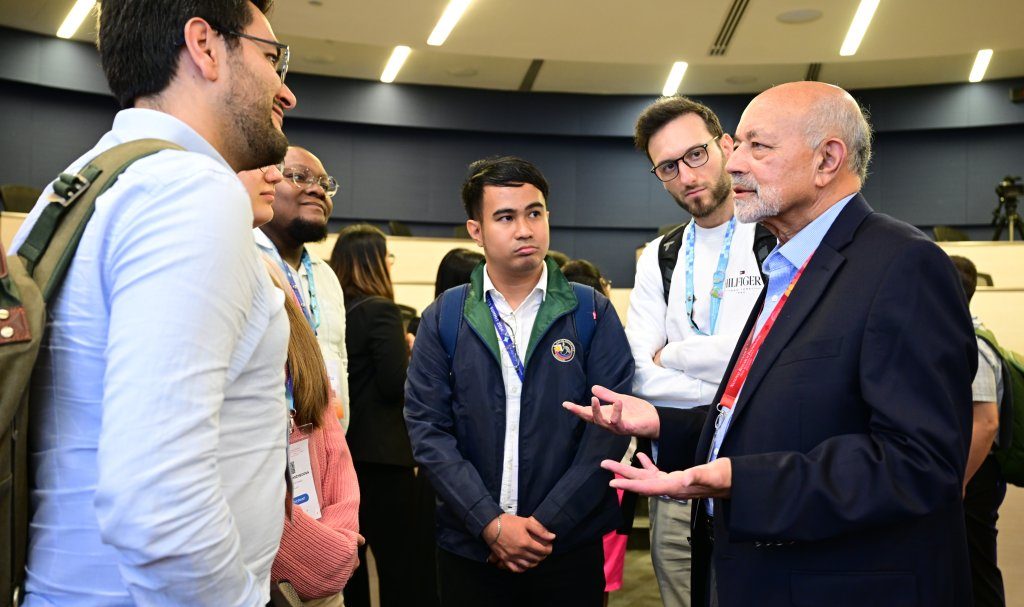
Returning for its 14th iteration, GYSS, organized by the National Research Foundation (NRF), saw roughly 350 young researchers gather in Singapore from across 57 countries. The young participants had the opportunity to hear from and engage with 21 distinguished speakers, including ACM Prize, Fields Medal, Millenium Technology Prize, Stockholm Water Prize, Turing Award and Nobel Prize winners.
This year, GYSS is held against the backdrop of Singapore’s latest round of STEM funding. At the opening ceremony, Mr Heng Swee Keat, Chairman of the NRF announced the Research, Innovation and Enterprise (RIE) 2030 plan. Singapore has committed roughly 1 percent of its gross domestic product, amounting to SG$37 billion, to build research strength and talent.
Mr Heng identified key trends in research, namely artificial intelligence (AI), quantum computing and interdisciplinary research, which are expected to shape the future of science. It is in these areas that the RIE2030 is particularly focused. The budget is a five-year strategy that aims to strengthen Singapore’s capabilities in AI, data and computing, renewable energy as well as build the nation’s talent pool and basic research capabilities.
“This recognizes the long term, and often unpredictable, nature of research and the critical role that breakthrough research plays in developing paradigm shifting innovations,” shared Mr Heng.
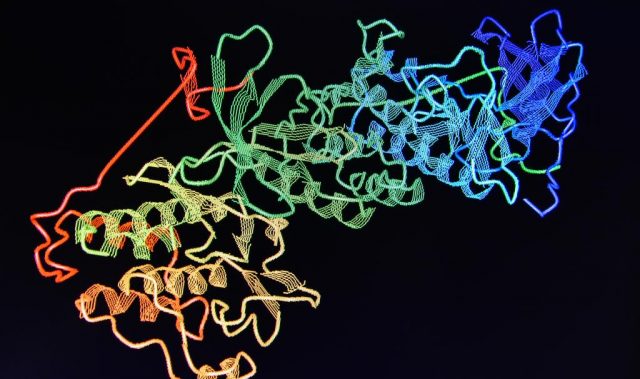
The plenary lectures, panel huddles, fireside chats and casual conversations at GYSS 2026 mirrored these topics. In the opening plenary, Professor David Baker, 2024 Nobel Prize winner in Chemistry shared his interdisciplinary journey with participants that led him to leveraging AI image generation methods to design new proteins with unique properties.
In a panel huddle titled Geopolitics to Genomics: Concurring Minds in a Multipolar World, panelists explored how researchers can pursue good cross-border collaborative science amid complicated political tensions.
“The information continues to flow freely,” said Professor Randy Schekman, 2013 Nobel Prize Winner in Physiology/Medicine. “Meetings like this where international students gather are a great source of pride and scientific advancement.”
Addressing emerging technologies, the panel Brains & Bytes: Levelling up Research in the Age of Generative AI discussed the opportunities and cautions of AI in research. Panelists stressed that AI must be developed and applied ethically and responsibly.
The speakers also noted that while AI may speed up certain functions of their work, both the training and perspectives of students cannot be ignored.
“Quite often, many discoveries are made through either the mistake of a student or professor, or in the fact that a lack of knowledge in a specific field allows students to ask questions that many experts have swept under the carpet a long time ago,” said Professor Sir Konstantin Novoselov. “This fresh perspective in any field is extremely important and students challenging professors is one of the driving forces of science.”
—
Image: National Research Foundation
Disclaimer: This article does not necessarily reflect the views of AsianScientist or its staff.