Into the eye of the storm
Climate change and catastrophic events are inherently intertwined with the water crisis, with 74 percent of all natural disasters between 2001 and 2018 being related to water. With altered climate patterns, the normal water cycle is also shifting, causing droughts and water shortages in some areas and heavier flash floods in others.
To build up disaster resilience, Aleph, the 1.43-petaFLOPS supercomputer at South Korea’s Pusan National University, simulated historical climate patterns and atmosphere-ocean interactions over regions and countries. These interactions are key to how storms intensify or weaken over time, enabling the model to predict landfalling tropical cyclones and their destructive potential.
Given the tantalizing volume of climate data available, the simulations ran for 13 months—not an easy feat on any level. But the power of exascale computing could potentially accelerate the process and reduce calculation errors.
Meanwhile, in the heart of Japan, the world’s top supercomputer, Fugaku, has a peak speed surpassing one exaFLOPS at the single precision or 32-bit level. But based on the LINPACK benchmark measured at double precision or 64 bits, Fugaku has yet to break the exascale barrier, with a score of 442 petaFLOPS.
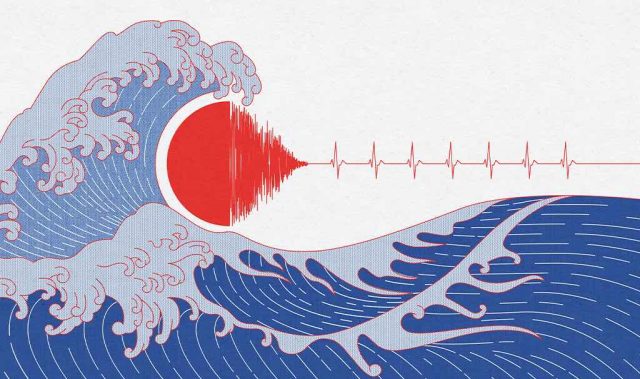
In early 2021, researchers from the University of Tohoku, University of Tokyo and Fujitsu Laboratories leveraged Fugaku’s power to run 20,000 tsunami flooding scenarios. By directly running these simulations to train a deep learning model, they optimized the model’s calculation performance to predict tsunami size and flooding effects in near real-time.
These models aren’t limited to flowing water, either. Much of the planet’s water is packaged as ice, such as the glaciers in the Himalayan mountain range. Besides rainfall, glacial melt and snow melt contribute to High-mountain Asia’s water flows, which not only change with seasons but also differ according to the western or eastern side of the mountains. With more data and exascale-powered modeling, researchers can paint a more accurate picture of the local water cycle.
By better anticipating natural hazards, climate change-aggravated disruptions and fluctuating water sources, scientists and societal leaders together can devise mechanisms to limit the damage and ensure a sustainable water supply even when disasters strike.
Moreover, such monitoring efforts could aid agricultural planning. Rather than lose valuable resources to floods or droughts, farmers can adjust crop rotations to changing water patterns and gather their harvest in time.