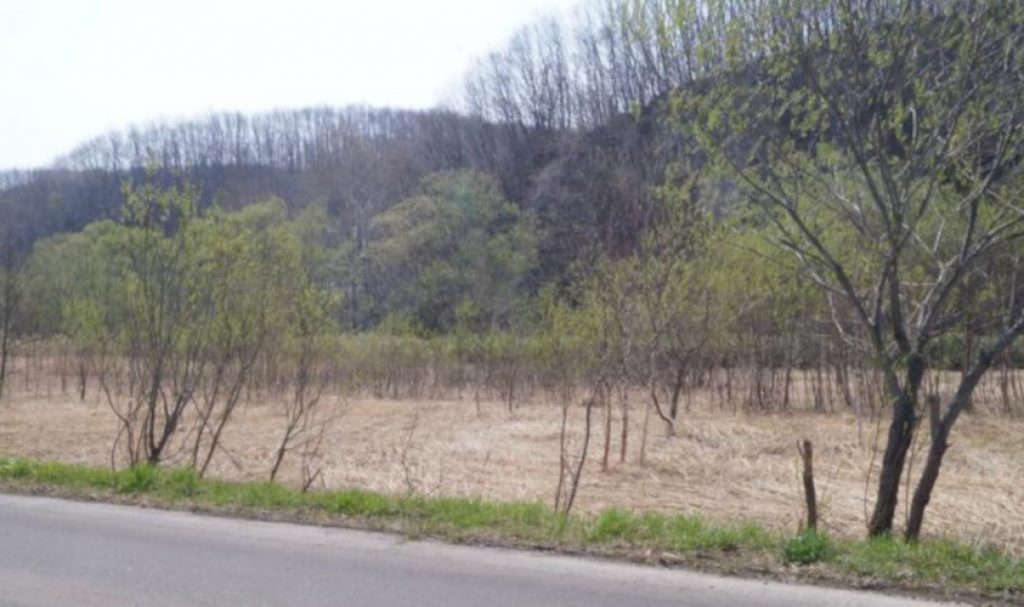
AsianScientist (Aug. 15, 2018) – A research group in Japan has demonstrated that abandoned farmland can be used for the preservation of wetland and grassland fauna. Their findings are pulished in Agriculture, Ecosystems and Environment.
In industrialized countries around the world, agriculture and the conversion of pristine lands into urban or industrial areas have exerted immense pressure on wildlife due to habitat destruction and fragmentation.
However, since the 1900s, farmland has been increasingly abandoned due to the decline in domestic agriculture and, in some countries, a decline in population. This yields an opportunity for abandoned farmland to be used as rehabilitation zones for grassland, wetland and forest animals.
In this study, Dr. Futoshi Nakamura of Hokkaido University, Japan, and his collaborators sought to understand whether birds repopulate abandoned farmland. They studied the distribution of bird species over an area in central Hokkaido, correlating the abundance and species diversity of different bird communities with different degrees of farmland abandonment and landscape structure.
The researchers found that abandoned farmland, especially when not surrounded by forests, benefit wetland and grassland birds more than other bird communities. However, how well a farmland can be reclaimed depends centrally on the intensity of farmland usage before abandonment.
The effects of landscape structure on animal communities are complex and, as a result, different studies report conflicting research findings. However, the authors of this study note that their analysis indicates that abandoned farmland can indeed be used for the preservation of wetland and grassland fauna. Their findings also untangle some of the factors underlying complicated ecological interactions, thus yielding insights for choosing land plots for specific conservation efforts.
The article can be found at: Hanioka et al. (2018) Assessing the Landscape-dependent Restoration Potential of Abandoned Farmland Using a Hierarchical Model of Bird Communities.
———
Source: Hokkaido University.
Disclaimer: This article does not necessarily reflect the views of AsianScientist or its staff.