AsianScientist (Jun. 29, 2017) – Researchers from the National University of Singapore have found that some plants selectively kill parts of their roots to survive in cold conditions. These findings, published in Cell, could pave the way for the development of novel strategies to improve the growth and yield of crops that undergo such environmental stress.
Plants adopt different strategies to survive the changing temperatures of their natural environments. This is most evident in temperate regions where forest trees shed their leaves to conserve energy during the cold season. Studies have shown that temperature can induce damage in the DNA of plant cells and has a profound effect on plant development and growth. However, its effects on plant stem cell behaviour and activity are still not well understood.
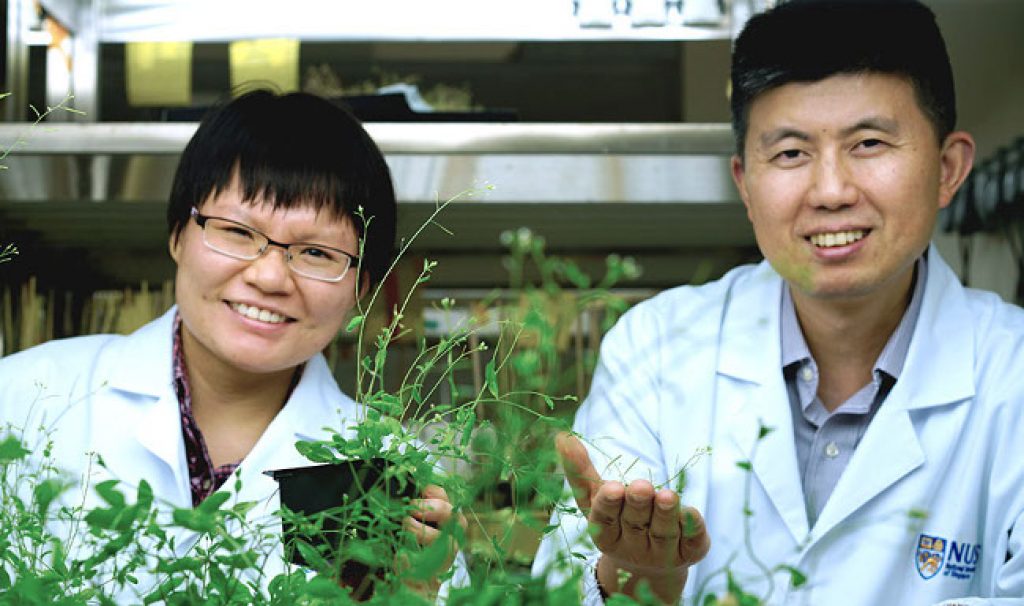
In the present study, a team led by Assistant Professor Xu Jian from NUS studied the effect of low temperatures on a small flowering plant called thale cress, known scientifically as Arabidopsis. This plant is a member of the Brassicaceae family, and its relatives include mustard greens, cabbage and kale.
“The study of plant roots has been largely neglected by agricultural researchers in crop improvement until recently. Examining roots is important as they serve as the major interface between a plant and its soil environment, and are responsible for water and nutrient uptake; both resources which are critical for a plant’s survival,” said Xu, who is also from the Centre for BioImaging Sciences at NUS.
To investigate the effect of chilling temperature on root development and growth, the team used the Arabidopsis root stem cell niche as an experimental model to perform in-depth studies at high spatial and temporal resolutions. They found that a chilling temperature of four degree Celsius leads to DNA damage in the root stem cells of the Arabidopsis, as well as their early descendants.
However, this DNA damage only caused the newly generated daughter stem cells to die, allowing the plants to maintain a functional stem cell niche. Inhibiting the DNA damage response in these daughter cells prevents their death, but this in turn increased the likelihood that other stem cells in the root stem cell niche would die, ultimately leading to the plant’s death.
“The sacrificial mechanism improves the root’s ability to withstand other low temperature-related stresses. When optimal temperatures are restored, the plant stem cells can divide at a faster rate, which will in turn enhance recovery and survival of the plant,” said study first author Dr. Hong Jing Han.
“Our discovery of how the Arabidopsis plant slays its columella stem cell daughters shed light on the plant’s unique strategy to survive harsh weather conditions, and demonstrates that the potential of engineering cold tolerance in plants to help them withstand harsh environmental conditions,” added Xu.
“The ability to do so will certainly allow farmers to extend the growing season of crops and the land area in which to grow them, increasing both yield stability and production capacity.”
Xu and his team next plan to uncover the gene regulatory network that has underpinned the successful adaptation of plants and their stem cells to cold environments.
The article can be found at: Hong et al. (2017) A Sacrifice-for-Survival Mechanism Protects Root Stem Cell Niche from Chilling Stress.
———
Source: National University of Singapore.
Disclaimer: This article does not necessarily reflect the views of AsianScientist or its staff.