A dearth of details
So entering into wild speculation mode, what can we guess from this news, if it happens to be true?
Well, currently the largest operational Chinese rocket is the heavy lift Long March 5, which made its first flight in November 2016. There are plans for a super heavy lift vehicle, the Long March 9, but this is still some 10-15 years off in the future. This is a long way off if they intend to beat the US at a return to the Moon.
The Long March 5 is capable of putting eight metric tons into a trans-lunar injection, and according to former NASA administrator Mike Griffin, launching and rendezvousing just four of these in low earth orbit (LEO) will enable the Chinese to build a manned lunar mission.
So as it stands, China already possesses the physical grunt to send a crew to the moon. All it needs to do is to send their equivalent command, service and lander modules to be assembled in LEO before flying to the Moon.
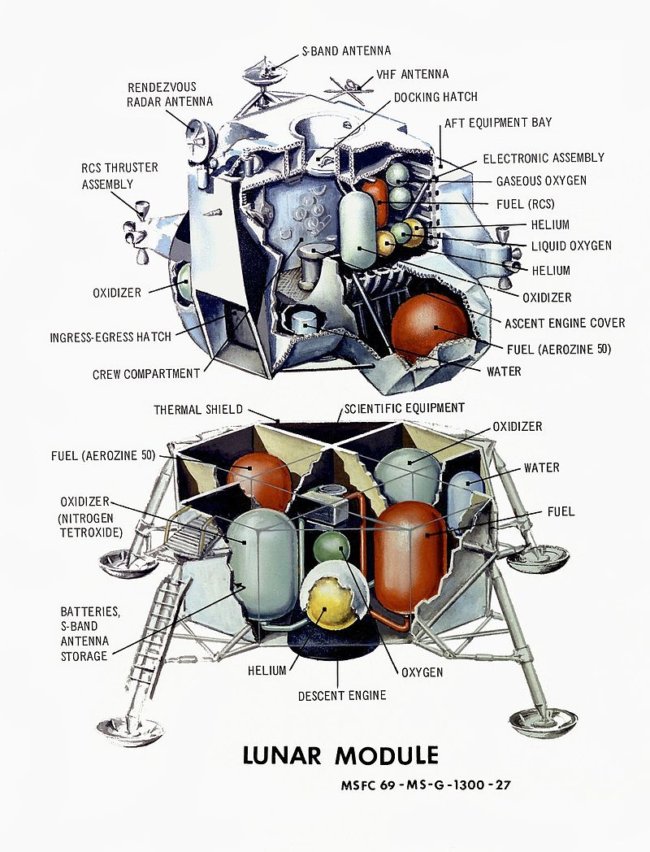
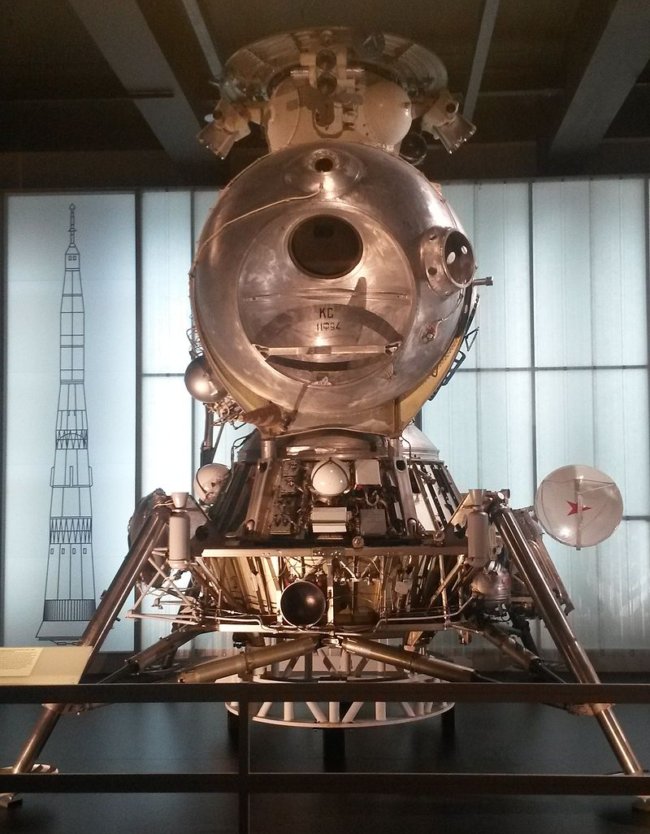
So what may their lunar lander look like? Looking at both the US Apollo mission and the cancelled Soviet lunar program, it might be fair to assume that the lander portion will consist of a two stages, an ascent stage and a descent stage.
The ascent stage may consist of pressurized crew compartment and integrated propulsion system to allow the crew to survive and ascend from the lunar surface, and also a landing gear/descent stage (which will be left on the surface and serve as a launch pad for the ascent stage) much the same as the Apollo.
In the past, China has used the Shenzhou spacecraft for hoisting taikonauts up to LEO for docking with the Tiangong-1 space station, and plans to continue using this workhorse for their future modular space station. Given the similarities (note: NOT a copy) to the Soviet/Russian Soyuz spacecraft, it’s perfectly feasible to suggest that the extant Shenzhou may have been developed further for lunar missions, much in the same way that the Soviet LK-3 lunar craft was based on existing Soyuz technology at the time. Why develop a whole new platform from scratch when there is nothing wrong with the Shenzhou?
So when will the super-secret spacecraft be ready, if it isn’t ready at the moment?
Given the development of the original Shenzhou started in 1992, and achieved its first manned flight in 2003 (11 years to develop, start to finish) and given the likelihood that the Shenzhou formed the basis for this new craft (because it’s cheaper and faster to implement a platform upgrade than to build from scratch), we can say the following is true:
- In 10-15 years, China will have both the Long March 9 and a manned lunar spacecraft for sure.
- If development of this new spacecraft is even halfway complete, they will be ready for a lunar mission within five years, using existing Long March 5 rockets.
- If development is complete at time of writing, then China could put a man on the Moon tomorrow if they wanted to.
Given the amount of Moon-rhetoric coming out of Camp Trump at the moment, and given this recent announcement from China, I would bet money that there will be a manned mission from China sooner rather than later, most likely within three years.
Because in space, nobody cares for second place. Let the race begin!
This article is from a monthly column called Final Frontiers. Click here to see the other articles in this series.
———
Copyright: Asian Scientist Magazine; Photo: neville mars/Flickr/CC.
Disclaimer: This article does not necessarily reflect the views of AsianScientist or its staff.