AsianScientist (Dec. 6, 2016) – Researchers from Korea and the US have developed electrodes that can be integrated with Internet of Things (IoT) devices for the diagnosis of biological signals. Their work was published in Advanced Functional Materials.
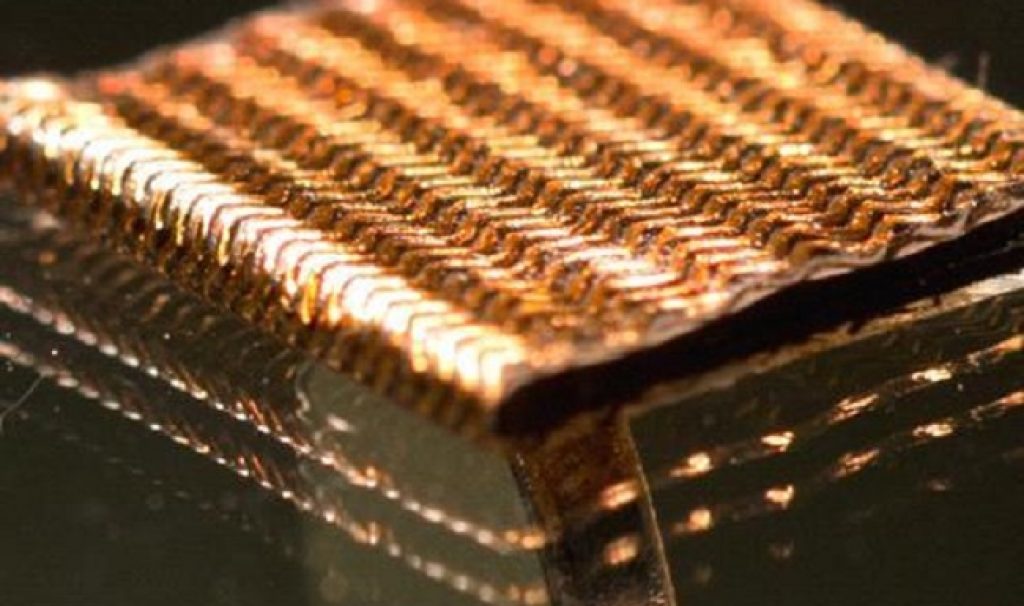
Developed by Professor Kyung-in Jang’s research team from the Daegu Gyeongbuk Institute of Science and Technology in collaboration with colleagues from the University of Illinois, the electrodes can be easily mounted on IoT devices to measure biological signals such as brain waves and electrocardiograms without the need for additional equipment, and without interfering in human activities.
Due to their pulpy gel forms, conventional hydrogel-based electrodes require external devices to measure biological signals, which make their attachment to and detachment from IoT devices unstable. In contrast, the electrodes developed by Jang can be easily integrated with IoT devices by magnets and electric signals generated on the skin can be directly transmitted to the IoT device.
Using the device, the research team has succeeded in storing and analyzing brain waves, electrocardiograms, eye and limb movements, and muscle contractions of the wearer over a long period of time.
The article can be found at: Jang et al. (2016) Ferromagnetic, Folded Electrode Composite as a Soft Interface to the Skin for Long-Term Electrophysiological Recording.
———
Source: Daegu Gyeongbuk Institute of Science and Technology.
Disclaimer: This article does not necessarily reflect the views of AsianScientist or its staff.