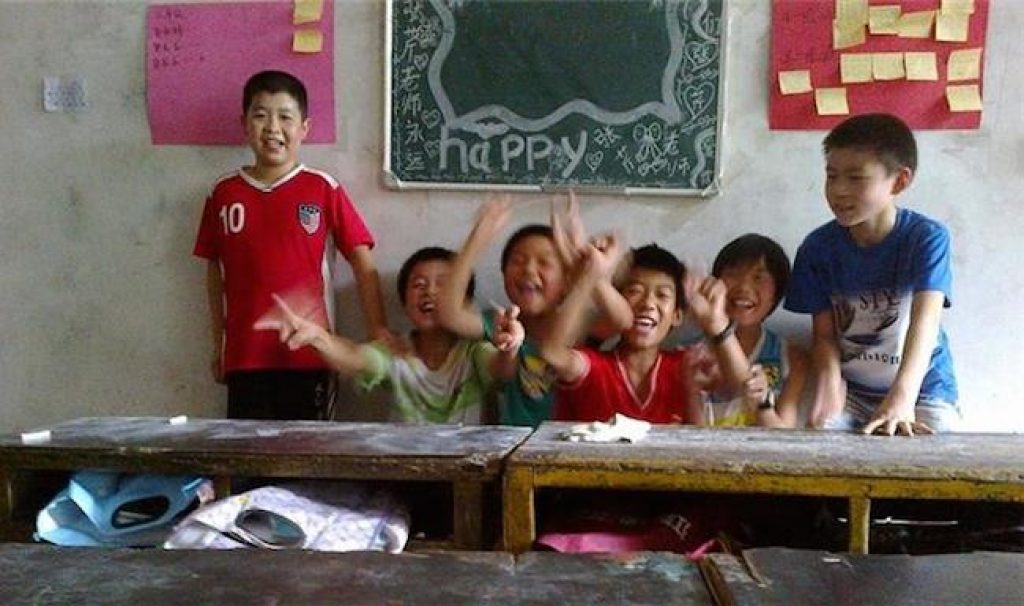
AsianScientist (Dec. 21, 2015) – Some 61 million rural children left behind by parents moving to China’s booming urban centers are at risk from increased fat and reduced protein in their diets, research published in Public Health Nutrition suggests.
The study of 975 children from 140 rural villages in nine provinces carefully analysed nutritional intake and showed a particular risk to boys who were left behind in the care of grandparents or one parent while a mother or father sought work away from home.
“There are sound financial reasons why so many people move from rural to urban areas in China, but the benefits that more money brings to a family can often be at the expense of child nutrition,” said Dr. Zhang Nan, study first author from the University of Manchester.
“The Chinese government needs to recognize this growing problem among rural communities and this research provides some evidence to target health policies on encouraging a balanced diet,” added Zhang.
The study found that ‘left behind’ boys in particular consumed more fat and less protein than those from complete families, which left them at increased risk of obesity and stunted growth. The researchers suggest the finding has important policy implications in a specific cultural context where ‘son preferences’ are powerful.
Although the findings don’t provide reasons for this change in diet, the researchers speculate that mothers moving away from home generally earn less, and that these lower earnings act in combination with grandparents’ poorer dietary knowledge or willingness to spend more on food.
Another academic paper led by Zhang has explored the intergenerational differences in beliefs about healthy eating for left-behind children among grandparents and parents and was published in Appetite.
Another factor at work, the research suggests, could be that prices of protein-based foods such as eggs and meat have increased faster than many households’ incomes, meaning that even though money is being sent home from one or both parents, nutrition doesn’t always improve.
Zhang said: “The process of parental migration is complex and the reasons for problems in boys’ nutrition are not straightforward, however we can see that both parents and grandparents in rural areas need to be educated about good diet. Because raising children can fall on all members of the family, good care-giving practice needs to become more widespread.”
The article can be found at: Zhang et al. (2015) A Multilevel Analysis of the Relationship Between Parental Migration and Left-behind Children’s Macronutrient Intakes in Rural China.
———
Source: Manchester University.
Disclaimer: This article does not necessarily reflect the views of AsianScientist or its staff.