AsianScientist (Dec. 10, 2014) – A commonly used anti-ulcer drug could also be used to treat diet-induced Type 2 diabetes, according to research published in Developmental Cell.
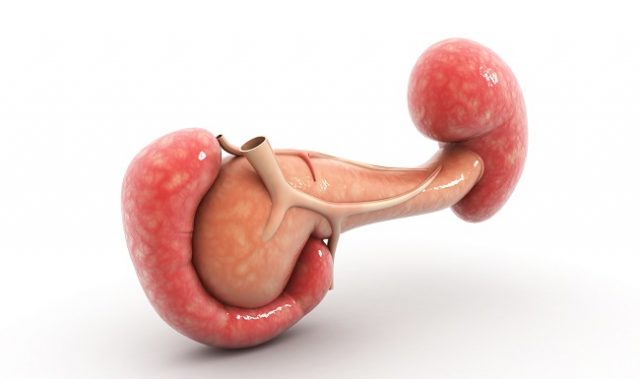
Diabetes patients cannot control blood sugar levels due to impairment of insulin hormone function. Insulin is secreted from pancreatic beta cells and acts on peripheral tissues. As an important cause of diabetes, excessively high fat diets cause oxidative stress in the beta cells, which destroys their insulin secreting function. This is termed ‘beta cell lipotoxicity’.
The team of Professor Nobutaka Hirokawa and Dr. Yosuke Tanaka from the University of Tokyo Graduate School of Medicine found a new molecular cascade of overnutrition-induced pathogenesis of type 2 diabetes. This cascade essentially involves a new unconventional function of the microtubule-based molecular motor KIF12 (kinesin superfamily protein 12).
Using superresolution laser fluorescence microscopy, the research team discovered that KIF12 simultaneously binds to the stress-regulating protein Hsc70 and its transcription factor Sp1. This complex stabilizes the nascent Sp1 protein and increases the expression level of these proteins, which in turn control oxidative stress. Intriguingly, overnutrition downregulates KIF12 expression, which results in impairment in insulin secretion.
Subsequently, the team treated mice unable to produce KIF12 with the antiulcer drug Selbex™ (teprenone), which is known to increase levels of stress-regulating proteins. Treatment with teprenone significantly ameliorated the diabetes of these mice.
This multidisciplinary study suggests that the risk of Type 2 diabetes caused by the over-consumption of oily foods could be reduced with this antiulcer drug. Having shown that discoveries in basic research can lead to unexpected clinical applications, the research group intends to further investigate the cell biology of motor proteins.
The article can be found at: Yang et al. (2014) Antioxidant Signaling Involving the Microtubule Motor KIF12 Is an Intracellular Target of Nutrition Excess in Beta Cells.
——
Source: University of Tokyo.
Disclaimer: This article does not necessarily reflect the views of AsianScientist or its staff.