AsianScientist (Sep. 4, 2014) – A study published in PLOS Medicine on large-scale rural sanitation programs in India highlights challenges in achieving sufficient access to latrines and reduction in open defecation to yield significant health benefits for young children.
The researchers, led by Sumeet Patil from the School of Public Health, University of California at Berkeley, and the Network for Engineering and Economics Research and Management in Mumbai, India conducted a cluster randomized controlled trial in 80 rural villages in the Indian state of Madhya Pradesh.
They measured the effect of India’s Total Sanitation campaign (an initiative to increase access to improved sanitation throughout rural India) on household latrine availability, defecation behaviors, and child health. A total of 5,209 children aged under five years and 3,039 households were involved in the study.
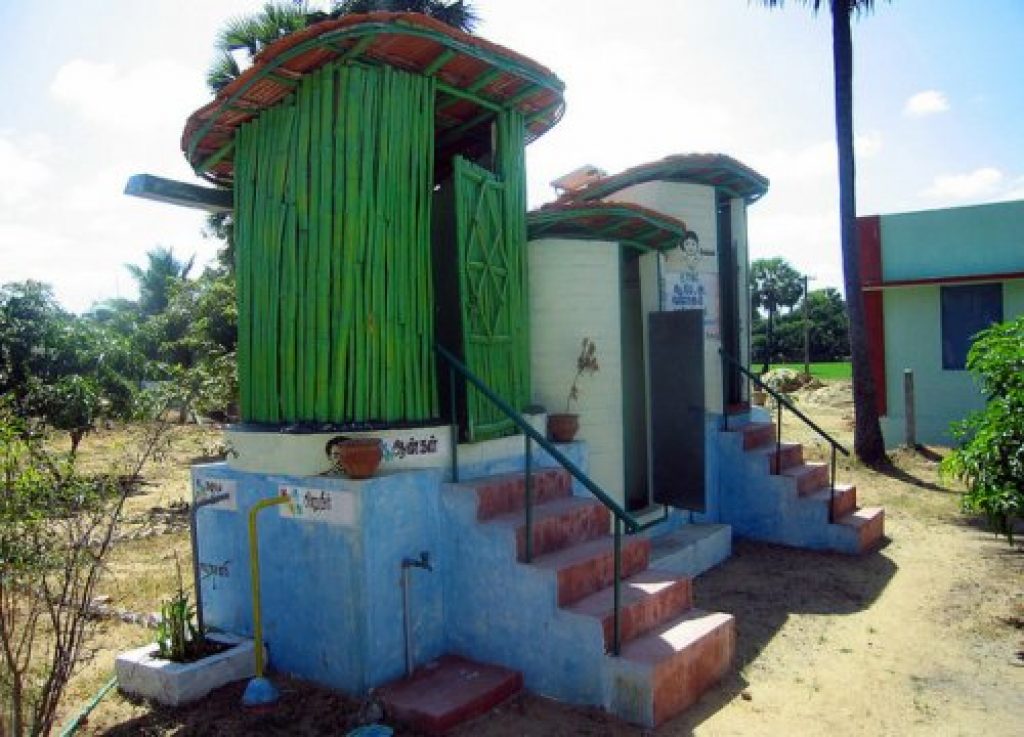
The authors found that the campaign intervention increased the percentage of households in a village with improved sanitation facilities by an average of 19 percent: in the intervention villages, an average of 41 percent of households had improved latrines compared to 22 percent of households in the control villages.
The intervention also decreased the proportion of adults who self-reported the practice of open defecation from 84 percent to 73 percent. However, the authors also found that the intervention did not improve child health as measured on the basis of multiple health outcomes, including growth, prevalence of gastrointestinal illnesses and anemia.
The authors say: “Despite the limitations of the present study, including short follow-up and evidence for contamination in the control group, the results underscore the challenge of achieving adequately large levels of improvements in sanitation to deliver the expected health benefits within the scaled-up rural sanitation programs.”
In an accompanying perspective, Clarissa Brocklehurst from the Gillings School of Global Public Health at Chapel Hill in North Carolina says: “There is an urgent need to continue to expand global understanding of what works, as well as what does not work, and keep focused on the important task of winning the sanitation battle.”
She continues: “If generations of children are to be saved from the stunting and ill-health that poor sanitation causes, and generations of women and girls are to be saved from the indignity and risk that open defecation entails, then addressing sanitation must be one of India’s highest priorities.”
The article can be found at: Patil et al. (2014) The Effect of India’s Total Sanitation Campaign on Defecation Behaviors and Child Health in Rural Madhya Pradesh: A Cluster Randomized Controlled Trial.
———
Source: Public Library of Science; Photo: Ajay Tallam/Flickr/CC.
Disclaimer: This article does not necessarily reflect the views of AsianScientist or its staff.