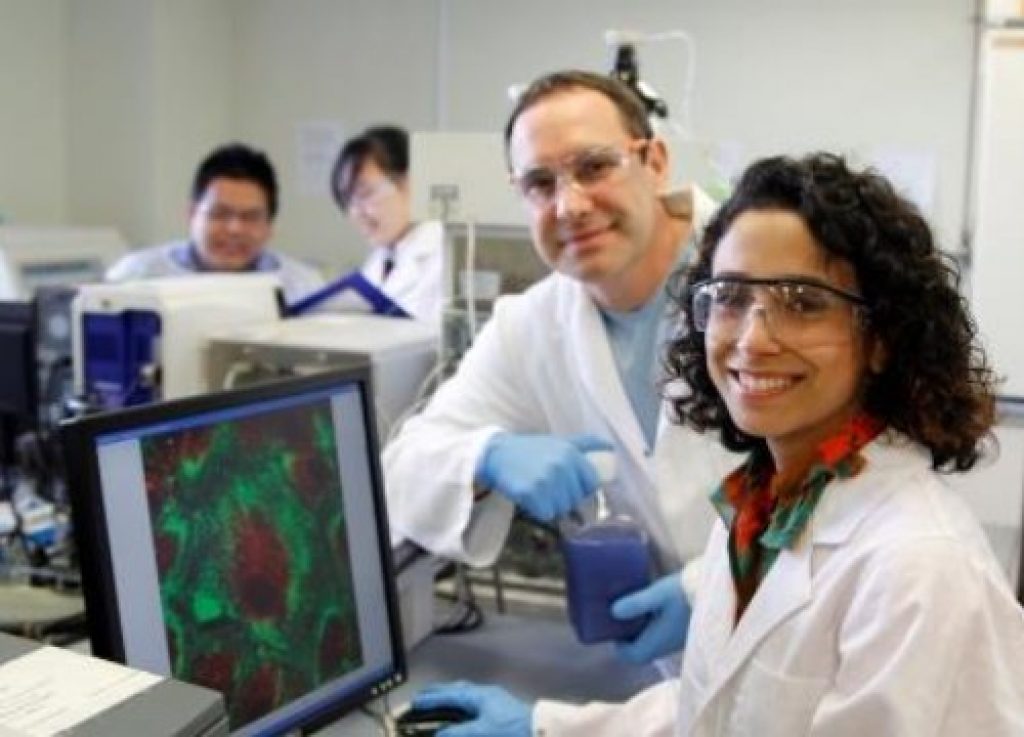
AsianScientist (Aug. 27, 2014) – The blue blood of abalone could be used to combat common cold sores and related herpes viruses according to a study published in the European Journal of Pharmaceutical Sciences. Chemical engineers and virologists at the University of Sydney have now identified how anti-viral molecules from edible sea snails block the entry of herpes viruses into cells.
“Hemocyanins are giant copper-containing glycoproteins and their primary function is to collect and deliver oxygen to desired tissues,” explains Professor Fariba Dehghani, who led the study. “Our study shows that abalone hemocyanin inhibits herpes simplex infection.”
“We know once infection occurs the virus integrates itself into a body’s nerve cells where it lays dormant awaiting reactivation. When awakened it travels back along the nerve tracks to the surface where it takes the form of watery blisters and ulcers on the skin.”
Professor Tony Cunningham, director of the Westmead Millennium Institutes, says there are a range of antivirals that have been prescribed to treat this often painful viral infection. While the treatment can shorten the disease, it cannot kill the virus.
Statistics show more than 70 percent of Australians carry the herpes simplex 1 with approximately 13 percent carriers of the herpes simplex 2 which can cause genital herpes.
“With the information we now have, we are hopeful that we can develop an anti-viral therapy that will prevent or reduce recurrence of the virus and/or hasten healing of the lesions,” states Professor Cunningham.
The raw material for the research came from the blood of black lip abalone found in pristine bays along the Tasmanian coastline.
The healing properties of abalone were discovered by accident says Mr. Adrian Cuthbertson, CEO, Marine Biotechnologies Australia Pty Ltd and the University’s industry research partner.
“Ten years ago we were involved in an abalone serum trial relating to cancer treatments. During the clinical tests where patients drank a processed form of Abalone blood they reported a much lower incidence in their cold sore breakouts,” says Mr. Cutherbertson.
“Around the same time we had an employee responsible for loading and unloading abalone shells containers. After a month of working with the shellfish he found that the viral warts which had plagued his hands for years disappeared.”
“This convinced me that abalone had to be investigated for its anti-viral properties.” says Mr. Cuthbertson.
After experiencing several setbacks three years ago, Mr. Cuthbertson was referred chemical engineers at the University of Sydney who also enlisted the expertise of virus researchers at the Westmead Millennium Institute.
This discovery is expected to lead to the generation of a new class of anti-viral compounds. Furthermore, Mr. Cuthbertson says the discovery has the potential to enhance the value of the Tasmanian abalone fishery.
The article can be found at: Zanjani et al. (2014) Formulation of Abalone Hemocyanin with High Antiviral Activity and Stability.
——-
Source: University of Sydney.
Disclaimer: This article does not necessarily reflect the views of AsianScientist or its staff.