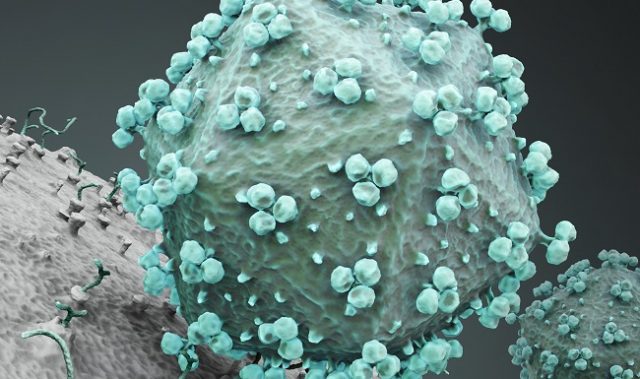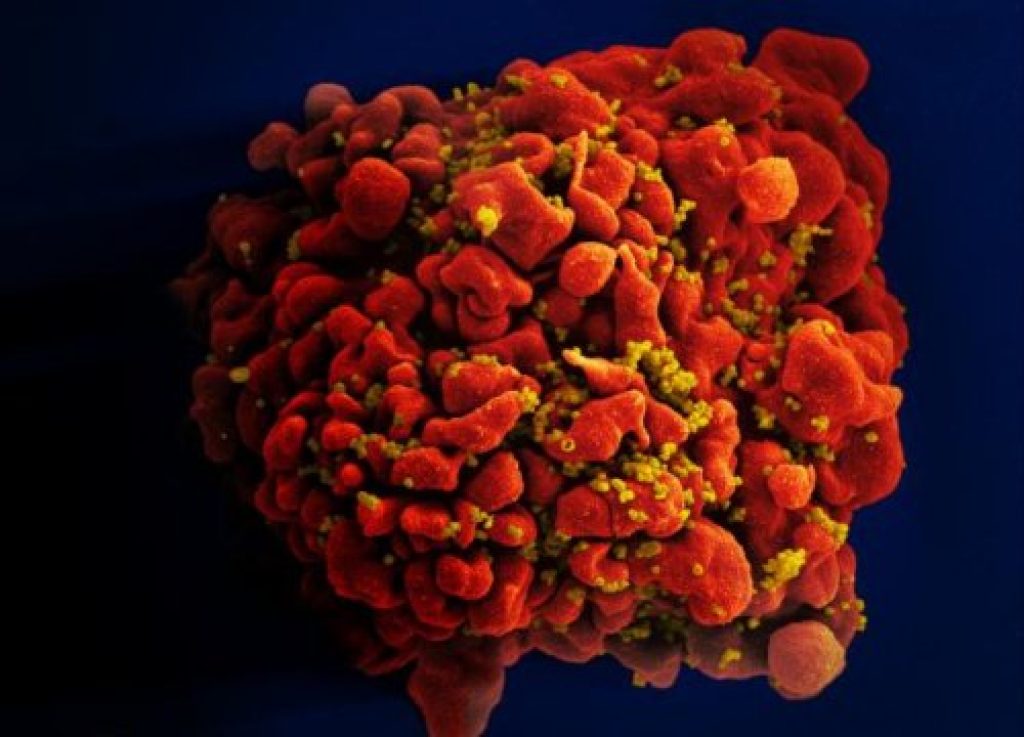
AsianScientist (Jul 16, 2014) – Research has provided new insights into how the HIV virus greatly boosts its chances of spreading infection, and why HIV is so hard to combat.
HIV infects human immune cells by turning the infection-fighting proteins of these cells into a “backdoor key” that lets the virus in. Recent research has found that another protein is involved as well. A peptide in semen that sticks together and forms structures known as “amyloid fibrils” enhances the virus’s infection rate by up to an astonishing 10,000 times.
The HIV fibrils—known as “semen-derived enhancers of viral infection” (SEVI)—have been studied by chemistry and pharmacology researchers at the University of Adelaide. The results of this work have now been published in the journal Biochimica et Biophysica Acta.
“Amyloid fibrils play an important role in a number of prominent diseases, such as Parkinson’s, Alzheimer’s and others, and it’s absolutely essential that we understand how they work if we have any hope of developing new drugs to stop them,” says lead author Dr. Ian Musgrave, from the University’s School of Medical Sciences.
In laboratory studies, the team found that the HIV fibrils are toxic towards cells from the nervous system. They also found that even when the fibril is broken apart, its constituent elements continue to be toxic.
“This suggests that you can’t just prevent one part of SEVI from aggregating and being toxic to cells. You need to shut the whole thing down or stop it from forming in the first place,” Dr. Musgrave says.
Researchers also tested the fibrils against another major type of body tissue, epithelial cells, and found they were not toxic to these cells.
“Epithelial cells are a major barrier to HIV entry. There have been theories that the fibrils can damage the epithelial layer, making it much easier for the virus to enter the body and infect the immune cells, but our findings show that healthy epithelial cells are resistant,” Dr. Musgrave says.
“This is an important finding because it could mean that the toxicity from the fibrils is dependent on the type of tissue they come in contact with.”
“We now have a better understanding of the role of these protein enhancers in HIV infection. However, it’s clear that much more research is needed in this area,” he says.
The article can be found at: Elias et al. (2014) SEVI, the Semen Enhancer of HIV Infection Along with Fragments from its Central region, Form Amyloid Fibrils that are Toxic to Neuronal cells.
——
Source: University of Adelaide; Photo: NIAID/Flickr/CC.
Disclaimer: This article does not necessarily reflect the views of AsianScientist or its staff.