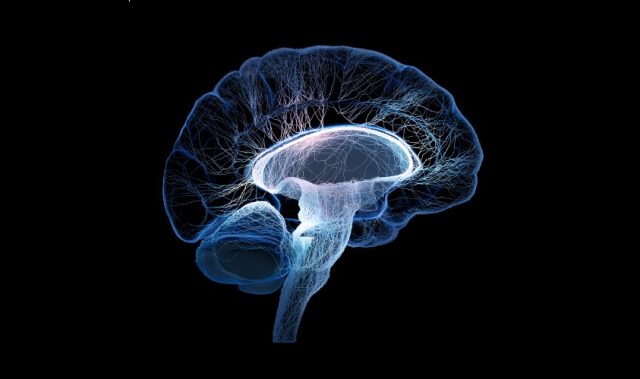
AsianScientist (Jun 24, 2014) – Researchers show that genes which modulate dopamine information signaling in the brain partially determine how we take risks, at least in the laboratory. This study has been published in the Proceedings of the National Academy of Sciences.
The research led by Professor Chew Soo Hong, Professor Richard Ebstein and Assistant Professor Zhong Songfa from the National University of Singapore (NUS) shows how dopaminergic genes are involved in risk taking and social and strategic decision making.
“The current study is unique in showing how a set of dopamine genes jointly impact strategic thinking,” said Prof. Chew, and “shows how different dopamine genes contribute to how individual thinking differs in a winner-takes-all competitive game.”
“The neurogenetic approach, in stratifying subject’s responses by differences in their genetic variants, is a powerful strategy towards unraveling the neurochemical pathways underpinning human in decision making behaviour,” commented Prof. Ebstein.
The B2ESS (lab for Behavioral x Bioeconomics and the Social Sciences) group at NUS has recruited more than 3,000 Han Chinese students from both Singapore and Beijing in one of the largest genetic studies of human decision making undertaken so far. The current study uses 217 subjects from the B2ESS cohort to administer a competitive game that captures individual differences in strategic thinking. The researchers focused on 12 genes, all involved in regulating dopamine.
The competition was a game called patent race, commonly used by economists to study competitive behaviour in a laboratory setting. It involves one person betting, via computer, with an anonymous opponent.
“We know from brain imaging studies that when people compete against one another, they actually engage in two distinct types of learning processes,” said Mr. Eric Set, PhD student at University of Illinois at Urbana-Champaign and first author of the study.
“One type involves learning purely from the consequences of your own actions, called reinforcement learning. The other is a bit more sophisticated, called belief learning, where people try to make a mental model of the other players, in order to anticipate and respond to their actions.”
The research team used a mathematical model of brain function during to correlate performance in reinforcement learning and belief learning with different variants of the 12 dopamine-related genes.
They found that differences in belief learning was associated with variation in three genes which primarily affect dopamine functioning in the medial prefrontal cortex. In contrast, differences in trial-and-error reinforcement learning was associated with variation in two genes that primarily affect striatal dopamine.
The findings correlate well with previous brain studies showing that the prefrontal cortex is involved in belief learning, while the striatum is involved in reinforcement learning. The high degree of overlap hints at the power of studying decision making at the neural and genetic levels under a single mathematical framework in this emerging direction of research.
The article can be found at: Set et al. (2014) Dissociable contribution of prefrontal and striatal dopaminergic genes to learning in economic games.
——
Source: National University of Singapore; Photo: Life Mental Health/Flickr/CC.
Disclaimer: This article does not necessarily reflect the views of AsianScientist or its staff.