AsianScientist (Mar. 31, 2014) – Researchers from Singapore have developed the world’s first fluorescent sensor to identify the presence of a common date rape drug.
The simple mix-and-see method, invented by Professor Chang Young-Tae of the Department of Chemistry at the National University of Singapore, identifies a drug known as GHB that is commonly used to spike beverages. The team’s findings were published in the journal Chemical Communications.
Gamma-hydroxybutyric acid, commonly known as GHB, is a central nervous system depressant that has been used in the medical setting as a general anesthetic. In the 1990s, it gained notoriety as a drug allegedly used in instances of drink spiking. Today, it is one of the most commonly used date rape drugs.
The researchers screened 5,500 dyes generated from different fluorescent scaffolds for their ability to bind to GHB. They shortlisted 17 fluorescent compounds and further tested them with a wide range of different GHB concentrations. Through this, the team identified that an orange fluorescent compound, which they called GHB Orange.
In order to examine the efficiency of GHB Orange, the team tested its detection capability by mixing a small amount of it with samples of various beverages, ranging from alcoholic to non-alcoholic, colored and colorless drinks.
The test revealed differences in the fluorescence intensity between GHB-free and GHB-spiked beverages. For drinks that are translucent or of a light color, such as water or vodka, the change in color could be easily detected with the naked eye.
The change in the color of darker drinks, such as cola and whiskey, required the aid of additional lighting to better detect the change. This was achieved in a simple mix-and-see process, which took less than 30 seconds.
The article can be found at: Zhai et al. (2014) Development of a fluorescent sensor for illicit date rape drug GHB.
———
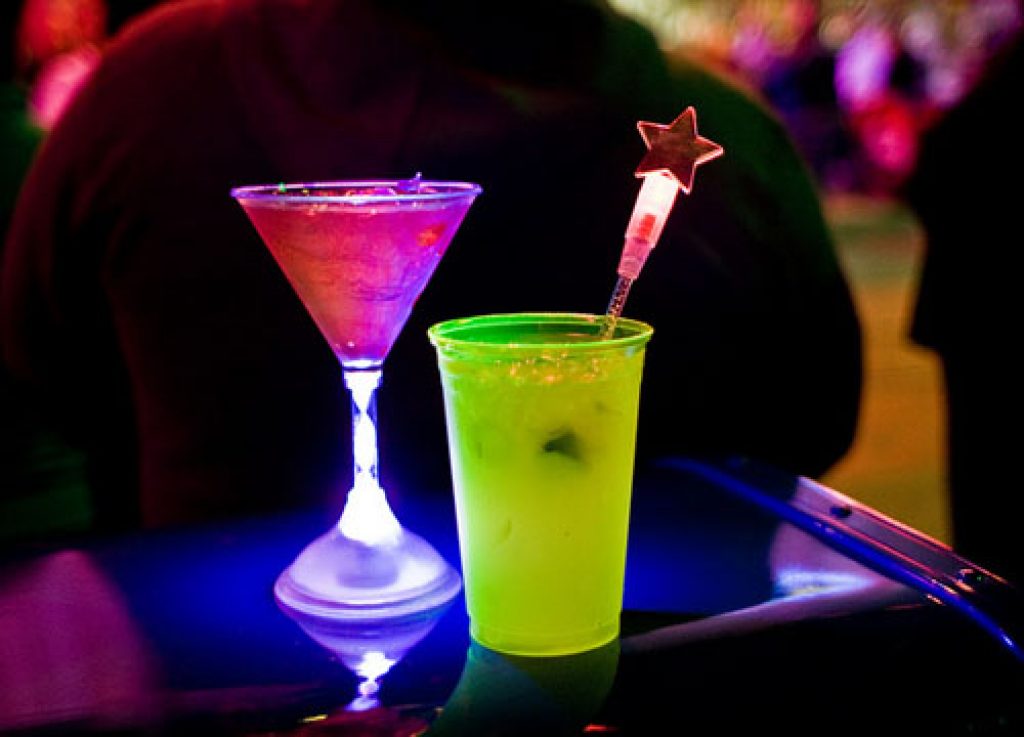
Source: National University of Singapore; Photo: Leslie Kalohi/Flickr/CC.
Disclaimer: This article does not necessarily reflect the views of AsianScientist or its staff.