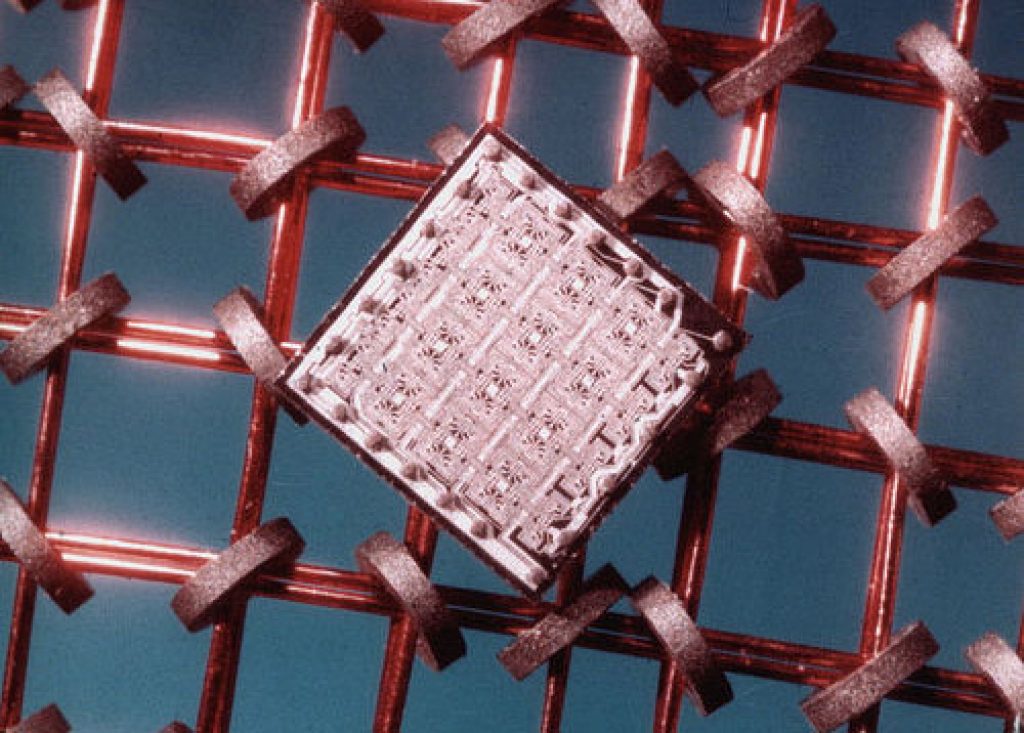
AsianScientist (Nov. 27, 2013) – Scientists from A*STAR’s Institute of Microelectronics (IME), Nanyang Technological University (NTU) and the National University of Singapore (NUS) have developed an integrated circuit (IC) chip with record-low power consumption for direct recording of brain activity.
This development minimizes the patient’s exposure to electromagnetic radiation and heat during the recording process, making it possible to integrate greater number of channels (>100 channels) to acquire comprehensive profiles of brain signals.
Neural recording is a vital tool to acquire and process brain signals, and is also applied in artificial limb control (or neural prosthesis) treatments for paralyzed patients.
The system comprises multiple electrodes for data acquisition and is implanted within the skull during the operation. The implantability of the system places tight limits on its size and power consumption, while at the same time demanding sufficient performance to record good quality data.
The team demonstrated, for the first time, a 100-channel neural-recording IC that has a record low power consumption of 0.94 mW per channel and the ability to deliver high quality signal recording. Compared to current neural recording ICs, the new Singapore-developed IC can operate at just 0.45 V supply voltage, half of what is typically required to achieve similar performance.
Using the new IC chip, the researchers were also able to successfully record neural signals of an anesthetized Sprague-Dawley rat, bringing the innovation a step closer to clinical deployment.
“The breakthrough is made possible using an innovative multi-supply-voltage scheme and dynamic-range folding approach in the circuit architecture to achieve low-voltage, low power consumption without trading off high performance data acquisition,” said Dr. Je Minkyu, deputy director of the Integrated Circuits and Systems Laboratory at IME.
“To realize a fully implantable neural recording system, we are also working with other departments on the neural probe design and materials, as well as the incorporation of drug delivery capability.”
——
Source: A*STAR; Photo: jurvetson/Flickr/CC.
Disclaimer: This article does not necessarily reflect the views of AsianScientist or its staff.