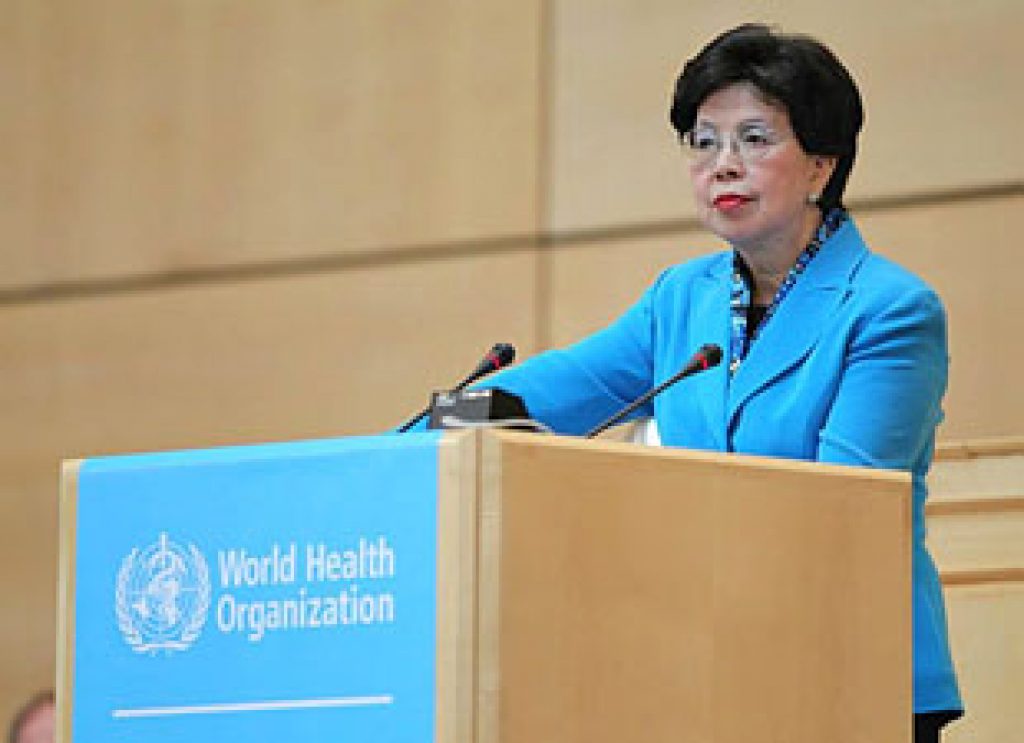
AsianScientist (May 27, 2013) – The immediate threat from the H7N9 avian influenza virus is over, said Dr. Margaret Chan, Director-General of the World Health Organization (WHO), in her May 20 address to the 66th World Health Assembly in Geneva, Switzerland.
No new laboratory-confirmed cases of human infection with H7N9 virus have been reported to the WHO by the National Health and Family Planning Commission in China since May 8. However, four additional deaths have been reported from previously laboratory-confirmed cases. To date, the WHO has been informed of a total of 131 laboratory-confirmed cases, including 36 deaths.
Dr. Chan attributed the limited spread of the H7N9 virus to the swift response by China in closing live poultry markets. Unlike with the severe acute respiratory syndrome (SARS) virus, no human-to-human transmission was detected with the H7N9 virus and all cases were traced to contact with live poultry.
“At the end of March this year, China reported the first-ever human infections with the H7N9 avian influenza virus. Within three weeks, more than 100 additional cases were confirmed. Although the source of human infection with the virus is not yet fully understood, the number of new cases dropped dramatically following the closing of live bird markets,” she said.
During the crisis, Dr. Chan said that the Chinese government worked with the WHO to stem the spread of the virus, and shared the virus strains and genetic sequence data with international experts.
“I thank China for collecting and communicating such a wealth of information, and for collaborating so closely with WHO. Chinese officials have promptly traced, monitored, and tested thousands of patient contacts, including hundreds of health care workers,” Dr. Chan said.
But Dr. Chan cautioned that these microbes will “always deliver surprises,” as “constant mutation and adaptation are the survival mechanisms of the microbial world.”
“Going forward, we must maintain a high level of vigilance. I cannot overemphasize the importance of immediate and fully transparent reporting to WHO, and of strict adherence to your obligations set out in the International Health Regulations. I ask Member States to do everything they can to ensure that health occupies a high place on the new development agenda,” she said.
——
Copyright: Asian Scientist Magazine; Photo: WHO/Pierre Albouy.
Disclaimer: This article does not necessarily reflect the views of AsianScientist or its staff.