AsianScientist (Jul. 18, 2012) – Thousands of young doctors in Pakistan’s Lahore city have gone on strike since June to protest against poor pay and work conditions in hospitals.
The Young Doctors’ Association (YDA)-Punjab Chapter and the Government of Punjab (GoP) have been at the negotiating table for more than a year over the medical service structure in Punjab, the largest province of Pakistan.
The YDA had been urging the government to increase the stipends of post-graduate students, change the structure of promotion for the doctors, and give doctors the same access to healthcare and other allowances that non-medical government employees enjoy.
Earlier in 2011, the pay scale of doctors was increased by the GoP, who reneged on a promise to address the other listed demands, citing the lack of funds.
According to the YDA, without a proper service structure, many doctors who have been appointed at the Grade 17 level retire at the same designation after serving their entire lives.
“Only a handful of the doctors get promotions easily,” said a member of YDA. “The system lacks the criteria for promotions of doctors and the promotion depends on back door channels,” he added.
On June 18, the YDA began a three-week long strike after failing negotiations with the government. They first shut down the out-patient departments of hospitals across the Punjab province.
The government responded furiously and refused further negotiations. To fuel tensions, the GoP invited applications for the appointment of new doctors and launched a media campaign against the YDA using public funds.
Meanwhile, senior faculty members and notable doctors from the King Edward Medical University and the Allama Iqbal Medical College, Lahore continued their attempts to resolve the differences between the YDA and the GoP.
Dr. Javaid Akram, from the Principal Allama Iqbal Medical College, Lahore, led the talks; his efforts however have failed to end the deadlock which saw the GoP resorting to martial force.
Police raids on YDA members
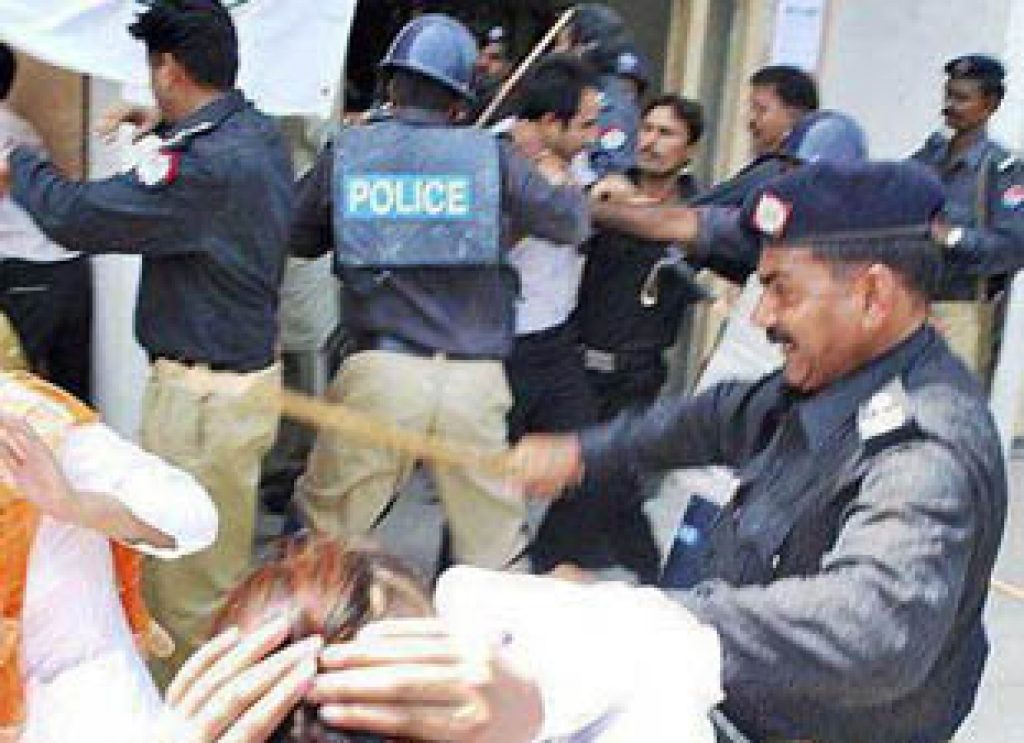
On June 1, police raided a meeting of General Body of the YDA which took place at the Services Hospital Lahore. At least two dozen prominent doctors were arrested, including the Dr. Waseem Ali, Dr. Aamir Bandesha, Dr. Javaid Ali, and Dr. Mohammad Maqbool.
The raid, which was covered live by most of the national news TV channels, showed the doctors being physically attacked by governmental forces, with many sustaining fractures and other injuries.
Police raids of other hospitals and hostels resulted in the arrest of a suspected 400 doctors, although the exact figure remains unverified. The GoP claimed to have arrested only 24 doctors.
Dr. Saad from King Edward Medical University, Lahore, said to Asian Scientist Magazine: “How can you expect doctors to work when you raid their houses, beat them and force them to work without addressing their just demands? How can you arrest doctors from their homes while they are sleeping?”
“The government is using police to force us to come to hospital without responding to our demands, many of my colleagues are in jail, three of them are in the Intensive Care Unit, one is even on the ventilator,” said Tariq Naseem, a member of YDA from Mayo Hospital Lahore.
Nearly 7,000 doctors in Lahore on strike
During the initial strike, doctors continued providing services in the emergency, in-patient, and surgical units. However, with the raid and arrests, the YDA decided to withdraw services on July 2 from all hospitals across the province.
According to official figures, out of 7,000 doctors in the city of Lahore, as few as 370 turned up to work at hospitals.
Many remain in hiding as the police continue their raids.
In an attempt to ameliorate the manpower crunch, the GoP sought help from military doctors on July 2. 150 doctors were sent in to Lahore, and over a thousand new doctors were employed by the government. Many of these new appointments bypassed laws and documentation required when hiring new medical staff.
The government also transferred rural health units to tertiary care hospitals in the city and halted classes for medical students, sending basic sciences faculty to fill the manpower gap in hospitals.
While the entire Lahore healthcare system entered into a near shut-down, the GoP claimed that hospitals were running at their normal pace and that things were under control.
On July 4, Shahbaz Sharif, the Punjab Chief Minister met with principals of medical universities and prominent senior doctors for negotiations.
After the meeting, the Provincial Minister of Law, Rana Sanaullah declared that the YDA has agreed to end the strike, a statement which the YDA denied and labeled as a tactic to divide the doctors.
The matter reached the Lahore High Court within a few days of the raid commencing, and YDA members were ordered to resume their duties.
The GoP, which had been instructed by the court to sort out the issue at the earliest, responded by approaching the Pakistan Medical and Dental Council (PMDC) to cancel the licenses of all the doctors who were members of the YDA.
The PMDC refused, saying, “Prima facie it seems that this fiasco had been orchestrated by the Punjab government and their mischief must be punished.”
Meanwhile, the YDA has refused to back down to demands by Pakistani officials that they resume work immediately.
“Whenever we are pushed to the wall and our rights are violated, we will go back on strike,” said spokesman Dr. Nasir Bokhari.
While there were no reported deaths in the outpatient clinics, the withdrawal of emergency services saw more than a dozen deaths reported. The government and YDA laid blame on each other for the deaths, with the former launching a murder charge against four doctors for a death of one-and-a-half year old child at the Mayo Hospital during the strike. The four have been granted bail while the case is pending.
Although the main action took place in the city, doctors across the country observed a one day strike in support of their colleagues after the police began their clamp down. Medical organizations including the Pakistan Medical Association also supported the stance of the doctors.
The situation has cooled for the time being, but core issues remain unresolved. Peaceful and meaningful dialogue between the two groups is needed to avoid a second conflict.
——
Copyright: Asian Scientist Magazine.
Disclaimer: This article does not necessarily reflect the views of AsianScientist or its staff.