


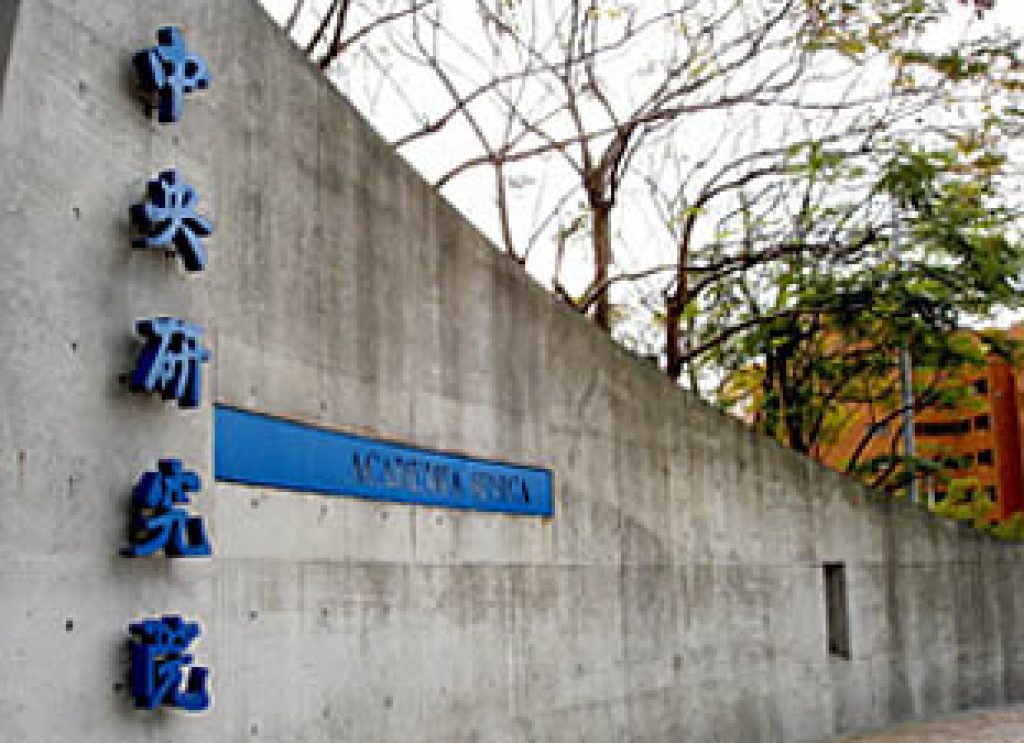
 AsianScientist (Feb. 23, 2012) – Academia Sinica Vice President Dr. Chao-Han Liu has been elected Foreign Associate of the U.S. National Academy of Engineering (NAE) for his contributions to ionospheric research and atmospheric remote sensing.
Each year, NAE elects 9 to 10 foreign associates from academy and industry, and Dr. Liu’s election brings the number of foreign associates to 206.
Being elected to the academy is considered one of the highest professional distinctions that can be accorded to an engineer.
As a pioneer in solar-terrestrial physics and remote sensing research, and as one of the founders of Taiwan’s space program, Dr. Liu proposed and guided the implementation of Taiwan’s Constellation Observation System for Meteorology Ionosphere and Climate, (COSMIC/FORMOSAT-III), in collaboration with the University Corporation for Atmospheric Research (UCAR) and the Jet Propulsion Laboratory (JPL) in the United States.
This system, launched in April 2006, is a six-satellite constellation using a radio occultation technique that revolutionized remote sensing of the Earth’s atmosphere.
Dr. Liu’s work led to the daily collection of up to 2,500 pieces of calibrated high-vertical resolution data for global atmospheric temperature and humidity profiles, improving daily weather forecasts for time scales greater than 36 hours.
Today, almost all major weather centers in the world use this system for their forecasting operations.
The success of this system also resulted in a subsequent collaborative mission between the National Oceanic and Atmospheric Administration (NOAA) and Taiwan’s Space Program which will start in 2015.
Other contributions by Dr. Liu include versatile and inexpensive technology known as “Computerized Ionosphere Tomography” for the remote sensing of ionospheres. He also established a VHF Radar system at National Central University to investigate atmospheric waves and turbulence.
Since the mid 1990s, Dr. Liu has led a multi-disciplinary group of scientists in global change and sustainability research, establishing Taiwan as a regional leader in this field.
——
Source: Academia Sinica.
Disclaimer: This article does not necessarily reflect the views of AsianScientist or its staff.

-768x454.jpg)




