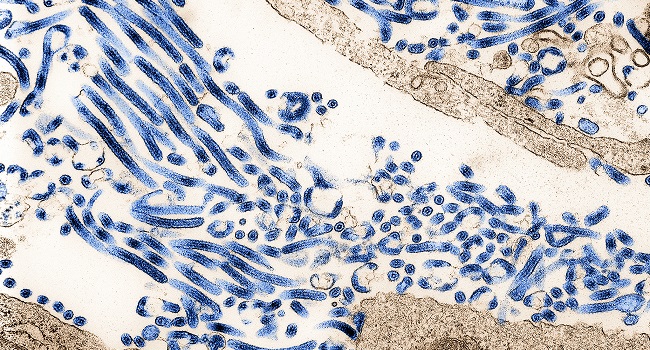
AsianScientist (May 25, 2011) – Chikungunya fever, caused by the chikungunya virus, is a mosquito-borne, infectious disease that is endemic to Southeast Asia and Africa.
Patients with chikungunya fever typically experience pain in their joints that persists for weeks or months, or in some cases years, but why this happens has so far remained a mystery.
A new study by researchers at the Singapore Immunology Network (SIgN) and the Communicable Diseases Center (CDC) at Tan Tock Seng Hospital in Singapore have found a strong positive correlation between the amount of chikungunya virus (known as the viral load) present in the body of patients and the level of inflammatory cytokines. The finding could help explain why the majority of patients with chikungunya fever are plagued by persistent joint pain.
The team studied 30 patients displaying symptoms common to chikungunya fever who were admitted to the CDC over a period of two months in 2008. While the majority of patients recovered completely within a week, four patients experienced persistent joint swelling; three in their fingers and one in the knees and shoulders.
The researchers measured the viral load in the patients together with a panel of inflammatory markers and cytokines, which are small protein molecules secreted by cells of the immune system. They found that patients with high viral load had unusually high amounts of inflammatory markers and pro-inflammatory cytokines (particularly interferon-alpha and interleukin-6) in the acute phase of the disease.
During the chronic phase of the disease, the researchers detected interleukin-17 – a pro-inflammatory cytokine with important roles in bone tissue inflammation and destruction – in the patients’ blood. However, only patients with persistent joint pain had high levels of interleukin-6 and granulocyte-macrophage colony-stimulating factor, while patients who recovered completely had high levels of the anti-inflammatory cytokine eotaxin.
These results suggest that viral load at the acute phase may determine the pattern and amount of cytokine secretion, and that high levels of specific pro-inflammatory cytokines in the chronic phase of the disease provides a possible explanation for the persistence of joint pain.
The study, published in the Journal of Infectious Diseases, was led by Dr. Lisa Ng, who was recently named as one of 15 Asian scientists to watch by Asian Scientist Magazine. Dr. Ng is noted for her work on severe acute respiratory syndrome (SARS) and avian influenza diagnostics.
——
Source: Agency for Science, Technology and Research.
Disclaimer: This article does not necessarily reflect the views of AsianScientist or its staff.