AsianScientist (Apr. 7, 2011) – After years of confusion about the safety of soy food consumption by breast cancer survivors, a large new study found that eating soy foods did not increase the risk of cancer recurrence or death among breast cancer survivors.
The study was presented yesterday at the American Association for Cancer Research (AACR) annual meeting in Orlando, Florida.
Investigators from several research institutions in the United States and China examined the association between soy food intake and breast cancer outcomes, using data from the After Breast Cancer Pooling Project, a multi-institution collaborative study.
“Soy foods contain large amounts of isoflavones that are known to bind to estrogen receptors in cells and have estrogen-like and anti-estrogenic effects,” said lead investigator Xiao Ou SHU, professor at the Vanderbilt-Ingram Cancer Center.
Estrogen is a hormone that has been linked to cancer growth, especially in breast cancer. Breast cancer patients whose tumors are found to be estrogen receptor positive are often treated with the estrogen-blocking drug tamoxifen.
Concerns arose that isoflavones may increase the risk of cancer recurrence among breast cancer patients by compromising the effect of tamoxifen, since both tamoxifen and isoflavones bind to estrogen receptors.
To address these concerns, the investigators pooled data from three prospective cohorts of breast cancer patients: Life After Cancer Epidemiology (LACE); Women’s Healthy Eating and Living Study (WHEL), both in the United States; and the Shanghai Breast Cancer Survival Study (SBCSS) in Shanghai, China.
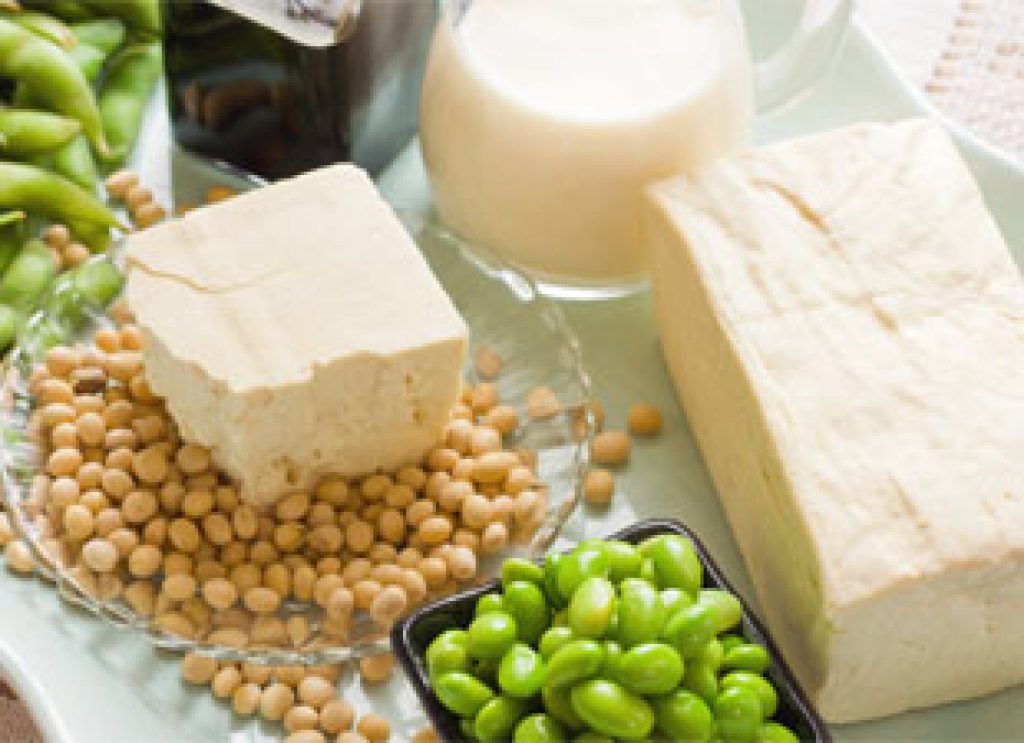
9,515 breast cancer patients were given a ‘soy questionnaire’ to assess what kinds of food they ate, including soy foods like tofu, soy milk, cooked soybeans, miso soup, soybean sprouts and breakfast/protein shakes with added soy.
The two major soy products that were common across all studies were tofu and soy milk. The average daily soy isoflavones intake among U.S. women was 3.2 mg.
In the Shanghai group the amount was more than 15 times higher, at 45.9 mg.
Soy isoflavones intake was assessed 14.6 months after the breast cancer diagnosis and the average follow-up time was approximately 7.4 years after diagnosis.
Women who ate the most soy food, at more than 11.83 mg isoflavones per day, had a 27 percent reduced risk for breast cancer recurrence, compared to those with the lowest intake level (3.68 mg per day or lower).
High soy food intake was also associated with a slightly reduced risk of mortality, although these results did not reach statistical significance.
Shu cautioned that their results should not be directly generalized to soy supplements, as supplements may differ from soy foods in both the type and amount of isoflavones.
———
Source: Vanderbilt University.
Disclaimer: This article does not necessarily reflect the views of AsianScientist or its staff.