


university of tokyo
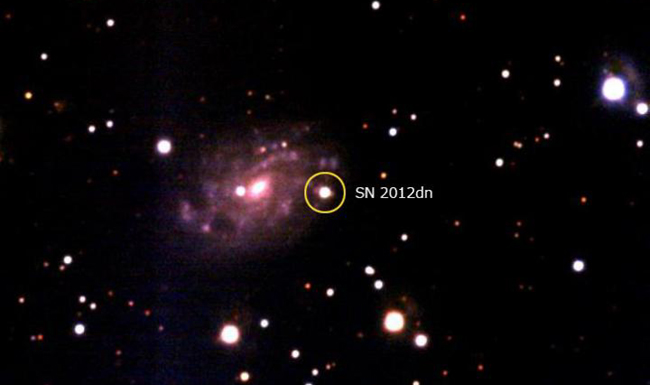
A Supernova Origin That’s Simply Extraordinary
Decades of debate and researchers still don’t agree on the origin of extraordinary supernovae. Now, we may have evidence for one popular theory.

Dengue Hotspots More Likely To Spread Zika Virus: Study
Subtropical and tropical countries with a history of mosquito-borne diseases have the greatest risk of the virus spreading once it hits the country.

How A Molecular Switch For Bone Formation Works
The transcriptional regulator Sp7/osterix could be the key to unlock the blueprint of bone formation in vertebrates, according to a genome-wide study.

3D Map Of 3,000 Distant Galaxies Prove Einstein Right
Einstein’s hundred year old theory of relativity still holds, according to a 3D map of 3,000 galaxies 13 billion light years from Earth.

Semiconductor Shows Ferromagnetism At Room Temperature
Researchers have reported growing iron-doped ferromagnetic semiconductors that work at room temperature—a longstanding physical constraint.

Male Pheromone Makes Mice More Aggressive
ESP1 not only promotes sexual behavior in females, but acts on males as well—and even the mouse secreting it.

What’s That Smell? Musk Receptor Identified
A single olfactory receptor protein, OR5AN1, affects the perception of musk odor in both mice and humans.

The Key To Multicellularity: Cancer-Suppressing Genes
How did humans and other complex, multicellular organisms evolve from single-celled ones? Genes identical to a human cancer-suppressing gene could be the answer.

Asian Institutions Continue Climb Up Nature’s Publishing Index (VIDEO)
China, Japan and South Korea are the top three countries on the 2016 Nature Index, a ranking based on the scientific output of over 60,000 research articles.


