


The Asian Scientist 100
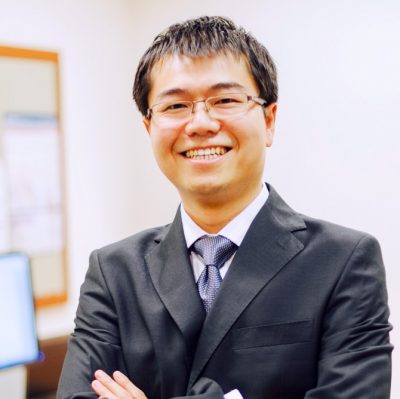
Yan Ning
Institution
National University of Singapore
Country
Singapore
Field
Environmental Sciences & Geology
For his research on harvesting materials from waste through rational catalytic design, Yan was awarded the 2017 Environment, Sustainability and Energy Division Early Career Award.
(Photo: National University of Singapore)
AWARDS
- 2017 Environment, Sustainability and Energy Division Early Career Award
Related articles

OPINION: Biotech Crops Provide Food Security In Southeast Asia
Southeast Asian nations should follow the Philippines down the path to biotech crops for food security, says Crispin Maslog of the Asian Institute of Journalism and Communication.

BASF To Invest €10 billion In Asia Pacific Region
Global chemical company, BASF, plans to invest €10 billion in Asia from 2013-2020, as part of the company's Asia Pacific strategy.

NTU Ramps Up 3D Printing With $30 Million Research Center
Soon, life-saving body parts such as corneas, skin and heart tissue may just be a click away, thanks to a new S$30 million 3D printing center in Singapore.
Singapore’s Second Satellite Blasts Off Into Space
Singapore's second satellite, built by Nanyang Technological University students, blasted off to space on board Russia’s RS-20B rocket.

NTU, UNESCO Create Science Kits For Developing Nations
Science learning kits jointly developed by NTU and UNESCO aim to help students in developing nations get hands on experience.

NTU Launches Nano & Pico Satellites
Designed and built by students and researchers at NTU, the satellites VELOX-I and VELOX-PIII are now orbiting 650 km above the Earth.

Making Driverless Cars A Reality
Singapore's A*STAR and LTA have set up a partnership to propel the development of automated vehicle systems within the country.

2-In-1 Motors Boost Electric Vehicle Range
By combining the traditional motor with the air-conditioning compressor, researchers have increased the range of electric vehicles by 15 to 20 percent.

The Genetic Building Blocks Of Height
A genetic study of 253,288 individuals has helped scientists pinpoint the elusive genes related to height in humans.