


The Asian Scientist 100
Yan Ning
Institution
National University of Singapore
Country
Singapore
Field
Environmental Sciences & Geology
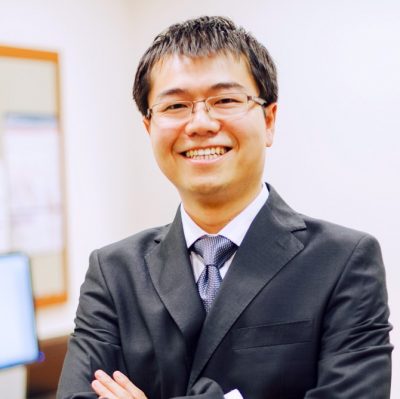
For his research on harvesting materials from waste through rational catalytic design, Yan was awarded the 2017 Environment, Sustainability and Energy Division Early Career Award.
(Photo: National University of Singapore)
AWARDS
- 2017 Environment, Sustainability and Energy Division Early Career Award
Related articles

10 Chinese Scientists Who Are Pushing The Envelope
Here are ten scientists contributing to China’s growing reputation as a global research powerhouse.
Asia’s Scientific Trailblazers: Dean Ho
The next frontier in precision medicine can be found at the interface of nanotechnology, biomedical science and artificial intelligence, says Professor Dean Ho.

Asia’s Rising Scientists: Justin Song
Theoretical and experimental physics inform and complement each other, says Dr. Justin Song of the Institute of High Performance Computing in Singapore.

AI Gets Physical
Robots are to artificial intelligence what bodies are to brains. Assistant Professor Pham Quang Cuong, a roboticist at Nanyang Technological University, Singapore, is helping AI impact the physical world.

Health Monitoring Patch Wirelessly Powered By Your Smartphone (VIDEO)
Researchers have developed a stretchable, battery-free health monitoring patch that can be laminated onto the skin and operated using wirelessly transmitted power.

The Rise Of The Robot Startups
Starting a robotics company may seem like the coolest job in the world, but in reality requires a lot of grit and hard work, said a panel of experts.

So You Want To Land That Data Science Internship? Here’s What You Need To Know
Having good technical skills alone is not enough to set you apart from the competition, said a panel of employers and current interns.

How Imperfections Help 2D Quantum Materials To Grow
Defects formed at the interface between two semiconducting monolayer materials help drive the growth of 2D quantum well superlattices, researchers say.

Asia’s Rising Scientists: Vinayak Sinha
Associate Professor Vinayak shares about his research on atmospheric contaminants and highlights role models who have inspired him on his research journey.