


The Asian Scientist 100
Tran Thi Thu Ha

Institution
Thái Nguyên University
Country
Vietnam
Field
Agriculture
Tran was awarded the Vietnamese Kovalevskaia Award 2019 for her research on the breeding and intensive cultivation of trees, the propagation and rearing of non-timber forest products and medicinal herbs, and the development of local medicinal plants.
(Photo: Thái Nguyên University)
AWARDS
- Kovalevskaia Award 2019
Related articles

Brain Machine Interfaces Go Wireless
By eliminating the need for wires going through the brain, wireless brain machine interfaces reduce the risk of infections.

Chip Enables Brain Implants Without The Wires
A smart chip that reduces data usage over a thousand-fold could make wireless brain implants a reality.

Aging Stem Cells Could Be Cause Of Hair Loss
The breakdown of collagen caused by accumulated DNA damage in hair follicle stem cells is one reason both mice and humans lose hair, scientists say.

Directing Droplets To Cool Extremely Hot Surfaces
Micropillar structures that can direct the dance of droplets could help scientists cool hot surfaces more efficiently.
Aspen Institute Announces 2016 Class Of New Voices Fellows
Through the New Voices Fellowship, leaders and field experts from Asia, Africa and Latin America hope to bring new perspectives to international development.
Bringing Sight To The Blind
Professor Masayo Takahashi, who performed the world's first induced pluripotent stem cell-derived transplant into humans, has a vision for stem cells in the clinic.
India’s First Lady Of Biotech
Ms. Kiran Mazumdar-Shaw, chairman and managing director of Biocon Limited, talks to Asian Scientist Magazine about the challenges faced by biotech companies in Asia.

Sugars, Science & Society
Professor Wong Chi-Huey, president of Academia Sinica of Taiwan, has built his career on carbohydrates. He shares his motivations for research and the impact science can have on society.
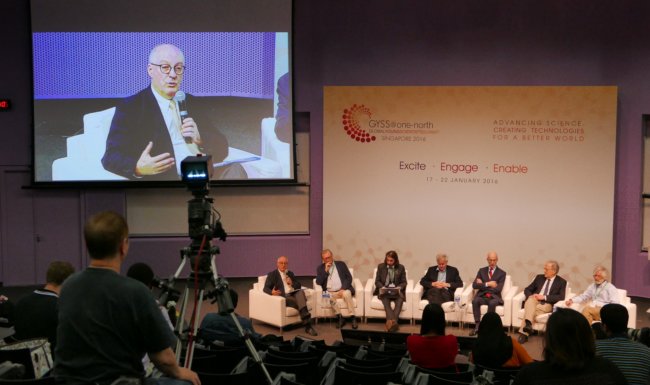
Scientists Should Engage The Public, Says GYSS 2016 Panel
Scientists themselves need to help educate the public on the work they do, say panelists at the Global Young Scientists Summit 2016.