


The Asian Scientist 100
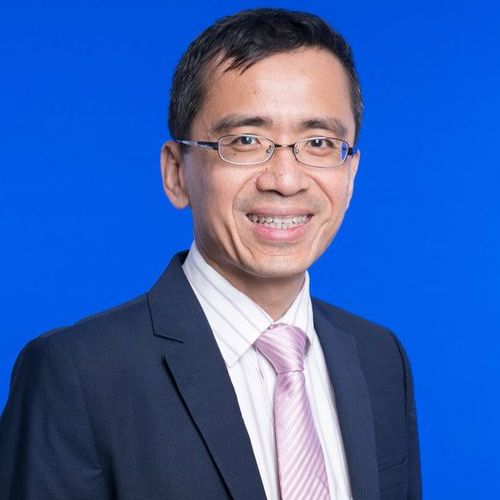
Tan Eng King
Institution
National Neuroscience Institute
Country
Singapore
Field
Life Sciences
Tan Eng King received the 2018 President’s Science Award for identifying clinical biomarkers, developing novel models and transforming patient care in Parkinson’s Disease. (Photo: National Neuroscience Institute)
Related articles

Left Brain-Right Brain Split Challenged By Musical Study
New research from Australia is challenging the widely held view that emotions and feelings are the domain of only the right hemisphere.
Gold Nanoparticles Detect Traces Of Contaminants In Milk
Researchers in Australia have developed a new class of biosensor that can detect exceptionally small traces of contaminants in liquids in just 40 minutes.

China Releases First Official Report On Smoking
China's Ministry of Health has released the country’s first report on the harms of smoking, detailing the current situation in China as well as future measures to control it.

Are Short-Term Medical Missions Useful?
A University of Sydney study questions usefulness of medical missions and calls for improved transparency, implementation, and policymaking.

OPINION: How Do We Feed Asia In 2050?
We need a multi-pronged strategy to ensure our grandchildren do not confront chronic global food crises, writes Professor Chris Barrett of Cornell University.

Fighting Food Allergies Through A Korean-Australian Collaboration
Food scientists in Australia and Korea are working together to develop innovative processing techniques that alter the properties of allergenic proteins in milk and food products.

$2bn Needed To Achieve Abbott’s Language Vision
Opposition Leader Tony Abbott has pledged to dramatically boost foreign language education in Australian schools.

Facebook is Wearing Young Asian Adults Out, Survey Says
A survey of 19 to 26-year-olds, conducted in China, Singapore, and the U.S., has found that over half of young adults are unable to keep up with their social media commitments.

Renewable Energy And Civil Society In Post-Fukushima Japan
Wind energy, particularly in the Hokkaido and Tohoku regions, should play a significant part of Japan's new energy policy, writes Sebastian Maslow of Tohoku University.