


The Asian Scientist 100
Tan Eng King
Institution
National Neuroscience Institute
Country
Singapore
Field
Life Sciences
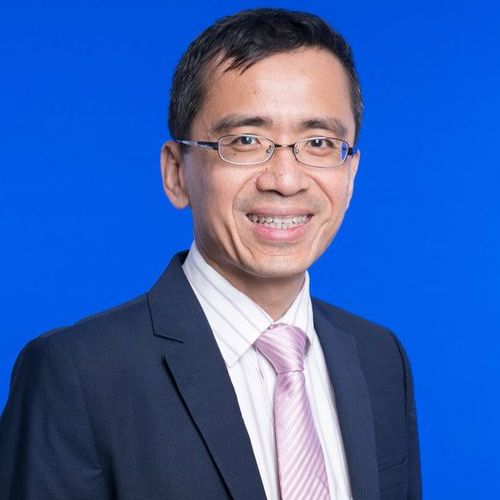
Tan Eng King received the 2018 President’s Science Award for identifying clinical biomarkers, developing novel models and transforming patient care in Parkinson’s Disease. (Photo: National Neuroscience Institute)
Related articles

Postnatal Depression: It Doesn’t Just Affect Women
An Australian study of over 3,000 fathers has found that approximately one in ten report high levels of distress in the first year after having a baby.

East Asia Expected To Be Polio Free By 2014: WHO
East Asia is set to be free from polio disease by early 2014, said Dr. Margaret Chan, director general of the World Health Organization, on Thursday.

Orangutan, Asian Rhino On Asian Endangered Species List
The Wildlife Conservation Society has released a list of endangered Asian species that call for immediate government action.

Larger Dinosaurs Feasted On Smaller, Flying Dinos
Researchers from the United States and China have found evidence that a feathered but flightless dinosaur was able to snag and consume small flying dinosaurs.

Asian Investments Into Education Have Outpaced The U.S., Experts Say
Propelled by superior education and family support policies, China and India are fast catching up with America in the global economic competition, says a new. U.S. report.

India To Explore Rare Earth Minerals In Its Waters
With China controlling most of valuable rare-earth mineral supplies, India has made a strategic move to back exploration off its own coast.

US May Lose To Asia In Medical R&D, Researchers Warn
U.S. researchers warn that strong, sustained growth in research spending in Asian nations contrasts with U.S. cuts and short-term approach – and a 'brain drain' could result.

Nobel-Winning Chemist Sir Harold Kroto On Science Education And Creativity
Scientific pursuit should be motivated by curiosity and not prizes, says Nobel Laureate Sir Harold Kroto, who opened an entirely new branch of chemistry with his co-discovery of the buckyball.

Japan Must Rebuild After Tsunami, Say Five Tohoku Mayors
Japan needs to look ahead and rebuild, urged a group of community leaders from areas of Tohoku devastated by the Great Japan Earthquake and tsunami a year ago.