


The Asian Scientist 100
Tan Eng King
Institution
National Neuroscience Institute
Country
Singapore
Field
Life Sciences
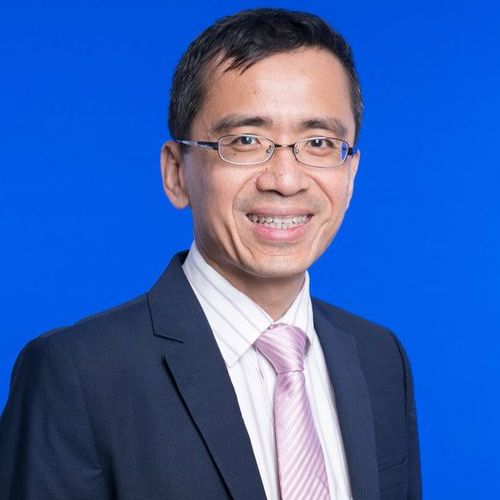
Tan Eng King received the 2018 President’s Science Award for identifying clinical biomarkers, developing novel models and transforming patient care in Parkinson’s Disease. (Photo: National Neuroscience Institute)
Related articles

Dell Opens Chengdu Facility, Plans To Hire 3,000
This week, Dell, the world’s leading systems and services provider, held a groundbreaking ceremony for its Chengdu Global Operation Facility at the Chengdu Hi-Tech Zone.

Wind Energy Leader Partners With Singapore Universities
Wind technology leader Gamesa has opened a new technology center focusing on advanced materials research in Singapore.

China To Spend US$308.5 Billion On Biotechnology Over Five Years
China will spend two trillion yuan (US$308.5 billion) on science and technology in the next five years, making biotechnology a priority.

VitroGro® Healing Liquid Offers Hope For Chronic Wounds
Researchers have developed a new wound-healing liquid which may reduce the need for skin grafts when treating chronic wounds.

Needle-Free Vaccine Delivery Gets US$16.3 Million Investment
An Australian biotech start-up Vaxxas Pty. Ltd. has received an investment of US$16.3 million to develop a revolutionary new needle-free vaccine delivery system called the Nanopatch.

EIU IT Industry Competitiveness Index: Seven APAC Economies In Top 20
Seven Asia Pacific economies have entered the Top 20 list of the most competitive IT economies in the world.

Intel Capital To Invest US$20 Million In Six Indian Technology Startups
Intel Capital, Intel’s global investment organization, has announced plans to invest US$20 million in six Indian companies.

10,000 Solar-Powered ATM Machines To Supply Cash To India’s Rural Poor
Vortex Engineering will provide solar-powered ATM machines to India's rural poor as part of its commitment to the Business Call to Action initiative that encourages private sector efforts to fight poverty.

Sumitomo Chemical To Build Synthetic Rubber Plant In Singapore
Petrochemical manufacturer Sumitomo Chemical is building a new solution styrene-butadiene rubber manufacturing plant for high-performance and fuel-efficient tires in Singapore.