


The Asian Scientist 100
Tan Eng King
Institution
National Neuroscience Institute
Country
Singapore
Field
Life Sciences
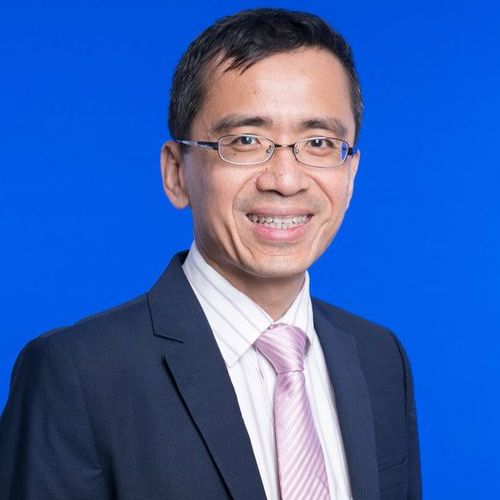
Tan Eng King received the 2018 President’s Science Award for identifying clinical biomarkers, developing novel models and transforming patient care in Parkinson’s Disease. (Photo: National Neuroscience Institute)
Related articles

Editor’s Note – January 2016 Print Magazine
Asian Scientist is proud to present the Asian Scientist 100, the first ever listing of scientists in Asia who have made an impact in the past year, in the January 2016 print magazine!

Scientific Success Can Happen Anywhere, Says Nobel Laureate Carlo Rubbia At GYSS 2016
Scientific success can happen anywhere and to anyone, says Carlo Rubbia, winner of the 1984 Nobel Prize in Physics.

Mathematics Is In Everything, Says Leslie Lamport At GYSS@one-north 2016
Mathematics is in everything around us, says eminent computer scientist and Turing Award winner Leslie Lamport.

Why Some People Need Less Sleep
Using a newly developed method for monitoring mouse sleep cycles, researchers identified a gene which allows mice to survive on less sleep than normal.

Be Inspired By The Best & Brightest In Science
The Global Young Scientists Summit 2016 will gather an elite group of scientific luminaries and technology leaders in Singapore to inspire the next generation.

Introducing The World’s Smallest Nanomagnet
A research group has successfully developed the world's smallest single-digit nanosize hard ferrite magnet for use in magnetic recording media.

China’s Wukong Joins The Hunt For Dark Matter
Wukong is the most sensitive dark matter probe to date and China's first mission focused purely on scientific discovery.

Fighting STIs In China With Doctor Training
Customized doctor training helped patients to reduce the risk of developing gonorrhea or chlamydia by 38 percent, study shows.

Arsenic Hitches A Ride On Sugar Transporters To Reach Plant ‘Arteries’
The discovery of transporters responsible for loading arsenic into plant phloems could aid the development of new cultivars which accumulate less toxic arsenic.