


The Asian Scientist 100
Tan Eng King
Institution
National Neuroscience Institute
Country
Singapore
Field
Life Sciences
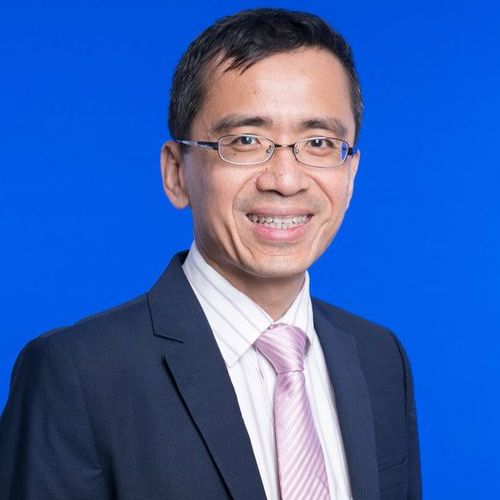
Tan Eng King received the 2018 President’s Science Award for identifying clinical biomarkers, developing novel models and transforming patient care in Parkinson’s Disease. (Photo: National Neuroscience Institute)
Related articles

Sterile Neutrinos Evade The NEOS Detector
Results from a new experiment shows that finding sterile neutrinos may be more challenging than we thought.

Environmental Researchers Win 2016 Mahathir Science Award
Three researchers from Australia have received the 2016 Mahathir Science Award for their extensive work on orangutans in Borneo.

A Re-Usable Catalyst For Vanilla Flavor Production
Scientists in India have discovered a greener method to producing vanillin, the main flavor compound in vanilla.

Elderly Chinese Living Longer But Faring Poorer
People in China are living longer but individuals in the oldest-old population experience poorer physical and cognitive function.

Asians With Type 2 Diabetes At Greater Risk Of Cancer
Researchers have found that type 2 diabetes is linked with a 26 percent increase in the risk of death from cancer in Asians.

NTU Singapore Collaborates With Chinese & Japanese Institutions
NTU Singapore partners with University of Chinese Academy of Sciences for artificial intelligence research and Japan's RIKEN for human biology studies.
Students Help Build Synthetic Yeast Chromosome
These synthetic yeast chromosomes bring scientists one step closer to creating artificial life.
Yellow Cabs Get Into Fewer Accidents Than Blue Ones
Painting all taxis in Singapore yellow could help save US$1.4 million a year, scientists estimate.

A Safer Shade Of Black
Polydopamine, a black substance structurally similar to melanin, could be a safer alternative to conventional chemical hair dyes.