


The Asian Scientist 100
Lu Ke

Institution
Chinese Academy of Sciences
Country
China
Field
Materials Sciences
Lu is the winner of the 2020 Future Science Prize (Physical Science Prize) for discovering and synthesizing a superior nanotwinned structure and gradient nanostructure.
(Photo: Future Science Prize)
AWARDS
- Future Science Prize 2020
Related articles
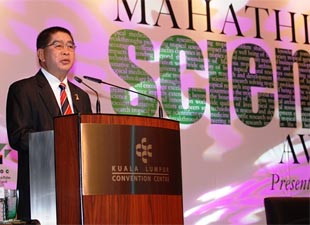
‘Father Of Hybrid Rice’ Yuan Longping Wins Mahathir Science Award
The 'Father of hybrid rice,' Professor Yuan Longping, has been conferred the 2011 Mahathir Science Award on January 31 this year.

Caffeine Linked To Estrogen Changes In Asian Women, NIH Study
Asian women who consumed roughly two cups of coffee a day had elevated estrogen levels when compared to women who consumed less, a study has found.

Study Links Testosterone In The Womb To Language Delays In Boys
New research from Australia has found that boys who are exposed to high levels of testosterone before birth are twice as likely to experience delays in language development.
Arsenic: Poisoning Nepal’s Groundwater Slowly And Steadily
After the discovery of unsafe levels of arsenic in Nepal’s groundwater a decade ago, government officials and aid groups are taking a critical look at whether their efforts have made a difference.

Takeda’s Orteronel Enters Phase III Clinical Trials For Prostate Cancer
Takeda has initiated enrollment of patients in Japan for the two ongoing global Phase III clinical trials for its anti-prostate cancer investigational agent, orteronel (TAK-700).
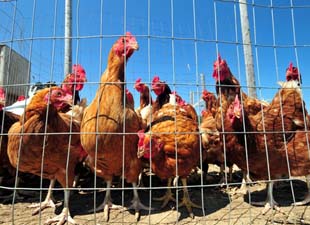
Controversial H5N1 Avian Flu Research Put On Hold For 60 Days
The world’s leading avian flu researchers have agreed to suspend avian flu transmission research for 60 days amid growing biosafety and biosecurity concerns.
32nd Institut Pasteur Launched In Vientiane, Laos
The 32nd Institut Pasteur was launched in Vientiane, Laos this week. The new research center will focus on infectious and parasitic diseases prevalent in Southeast Asia.

Big Hips? It May Protect You From Diabetes And Heart Disease
A study has found that people with big hips and a small waist are at the lowest end of the risk scale for premature death, and people with small hips and a large waist are at the highest risk.

The Yangtze River Basin Is Drying Up, WWF Says
According to a new WWF study, many Yangtze River Basin lakes are shrinking dramatically and could dry up completely if measures aren’t taken to reverse this trend.