


The Asian Scientist 100
Lu Ke

Institution
Chinese Academy of Sciences
Country
China
Field
Materials Sciences
Lu is the winner of the 2020 Future Science Prize (Physical Science Prize) for discovering and synthesizing a superior nanotwinned structure and gradient nanostructure.
(Photo: Future Science Prize)
AWARDS
- Future Science Prize 2020
Related articles
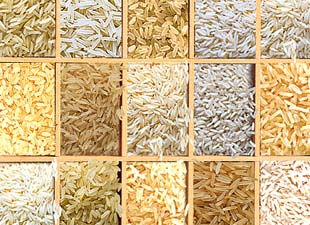
Harvard Study: Eating White Rice Increases Risk Of Type 2 Diabetes
A recent Harvard study has discovered a link between higher white rice intake and a significantly elevated risk of type 2 diabetes, especially among Asian populations.

Philippines To Launch Nationwide Study On Disaster Medical Preparedness
Health officials in the Philippines, one of the most disaster-prone countries worldwide, are launching a nationwide study to determine whether medical facilities can function during an emergency.

NASA To Conduct Major Airborne Scientific Study In Southeast Asia
NASA scientists are planning a complex and ambitious study to probe a vast expanse of the Southeast Asian atmosphere from top to bottom.

OPINION: Will Mandatory Research Publication Help Indonesia’s R&D?
Indonesia's higher education ministry recently made research publication a graduation requirement for all its students. But will this help to cure Indonesia's lagging state of scholarship?

Traveling Through Space At Warp Speed May Kill You, Scientists Say
Long distance space travel could create the ultimate 'killer entrance,' devastating your destination and anything around the arriving spacecraft, say University of Sydney researchers.

Singapore Third Most Competitive City Globally, EIU ‘Hot Spots’ Study
An Economist Intelligence Unit study ranking 120 of the world’s major cities has found Singapore to be the most competitive city in Asia, and third worldwide behind New York and London.
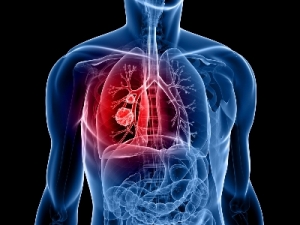
Discovery Of Novel Fusion Gene: Hope For Targeted Treatment Of Lung Cancer?
Four research groups, including three based in Asia, have independently identified a novel fusion gene found in a subpopulation of lung tumors.

Asahi Kasei Announces Agreement To Acquire ZOLL Medical
Chemical manufacturer Asahi Kasei Corporation is set to acquire ZOLL Medical Corporation for approximately US$2.21 billion.
Covidien Opens R&D Facility In Hyderabad, India
Healthcare provider Covidien announced last week the opening of four R&D centers in Hyderabad, India; Boulder, Colorado; Irvine, California; and Trevoux, France.