


The Asian Scientist 100
Lu Ke

Institution
Chinese Academy of Sciences
Country
China
Field
Materials Sciences
Lu is the winner of the 2020 Future Science Prize (Physical Science Prize) for discovering and synthesizing a superior nanotwinned structure and gradient nanostructure.
(Photo: Future Science Prize)
AWARDS
- Future Science Prize 2020
Related articles

Developing An Asian Version Of Plumpy’Nut In Vietnam
The National Institute for Nutrition in Vietnam has produced a regional alternative to the peanut-paste treatment known as Plumpy'Nut to treat malnutrition in Southeast Asia.
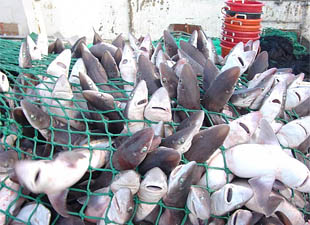
Chinese Government To Take Shark Fin Soup Off Menu
In what could be a turning tide for the global shark conservation effort, China's State Council has declared that within one to three years it will stop serving shark fin soup at official receptions.

Study: Developing World Has 5% Chance Of Meeting UN Child Hunger Target
Insufficient progress has been made on halving the number of children who suffer from hunger, says a new Lancet study.

Markhor Goat Species Makes Comeback In Pakistan
According to the Wildlife Conservation Society (WCS), the Markhor, a majestic wild goat species, is making a remarkable comeback in Pakistan as a result of conservation efforts.

President Hu Jintao: Chinese R&D Needs More Innovation
Top Chinese leaders have called for reforms to China's science and technology program that include innovation and integration with social and economic development.

Shrinking Leaves Linked To Climate Change In Australia
Researchers from Australia and China have discovered that recent climate change is causing leaves of some Australian plants to narrow in size

MIT Researchers Find High Concentrations Of Lead In Indian Ocean
Researchers from MIT have unearthed high concentrations of lead in the Indian Ocean, as well as areas closer to population centers such as Singapore.

Say That Again? New Telephone Test To Determine Hearing Loss
Researchers have designed a new hearing-screening test in Mandarin for people suffering from hearing loss in China.

AstraZeneca Invests US$200m Into Manufacturing Facility In China Medical City
AstraZeneca today announced a US$200 million investment in a new manufacturing facility, located in China Medical City, Taizhou, Jiangsu province in Eastern China.