


The Asian Scientist 100
Lu Ke

Institution
Chinese Academy of Sciences
Country
China
Field
Materials Sciences
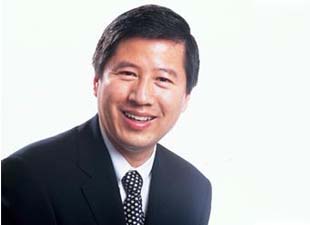
Lu is the winner of the 2020 Future Science Prize (Physical Science Prize) for discovering and synthesizing a superior nanotwinned structure and gradient nanostructure.
(Photo: Future Science Prize)
AWARDS
- Future Science Prize 2020
Related articles

InkJet Printing Of Single Crystal Thin-Film Transistors
Japanese researchers report a new technique for printing thin film transistors called InkJet technology.

Time & Numbers Are Linked In Our Minds
Research shows that people associate small numbers with short time intervals and large numbers with longer intervals - suggesting that these two systems are linked in the brain.

New Bill To Fight Philippine Maternal Deaths
Filipino politicians hope that the new Responsible Parenthood-Reproductive Health bill will address the high number of maternal deaths in the Philippines.

International Students To Face Tougher Visa Restrictions In The UK
The UK Home Office announced today scores of reforms to the student visas system aimed at reducing misuse of the system.

Can Acupuncture Replace Drugs For Tension Headaches?
RMIT University researchers have begun recruiting volunteers for a new study investigating the use of acupuncture and counseling as a treatment for tension headaches.
First Chinese Investor-Backed Drug Maker To Operate In U.S. & China
The Hamner Institutes for Health Sciences and Ascletis, Inc. have signed a formal MOU towards a large-scale joint venture between the two parties.

Dr. Reddy’s Acquires Russian Portfolio From JB Chemicals & Pharmaceuticals
Dr. Reddy’s Laboratories announced on Friday that it will acquire the prescription portfolio of JB Chemicals & Pharmaceuticals in Russia and other CIS regions.

Like Marco Polo, World’s Largest Sheep Travels Across Central Asia
Thanks to a non-invasive technique that extracts DNA extracts from fecal samples, researchers have finally managed to pinpoint movements of the once-elusive Marco Polo sheep.

New Method Reveals Subtle Structural Variations In Human Genomes
Scientists at BGI have developed a novel whole-genome de novo assembly strategy to map structural variations in individual human genomes.