


The Asian Scientist 100
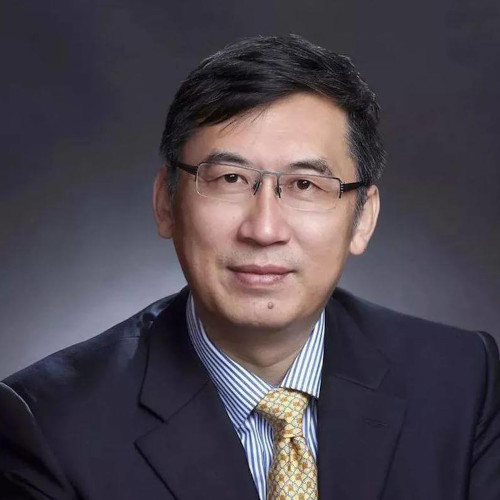
Lu Ke
Institution
Chinese Academy of Sciences
Country
China
Field
Materials Sciences
Lu is the winner of the 2020 Future Science Prize (Physical Science Prize) for discovering and synthesizing a superior nanotwinned structure and gradient nanostructure.
(Photo: Future Science Prize)
AWARDS
- Future Science Prize 2020
Related articles

Boost Your Brain With Puzzle Games
Want to improve your mental finesse? Playing a puzzle game like Cut the Rope could just be the thing you need.

Treatment For Deadly Nipah On The Horizon
The monoclonal antibody m102.4 prevents death in primates infected with Nipah virus even when administered 5 days after infection.

“Virtual Water” Accounting Tracks China’s Supply
A method of modelling "virtual water" in China has shown that water usage for agriculture can be reduced without compromising food security.
Japan & ADB Establish US$17 Million Low-Carbon Tech Fund
The US$17.65 million Japan Fund for the Joint Crediting Mechanism aims to help developing countries embrace low carbon technologies by overcoming the barriers of high initial investment.

Building A Palace On The Moon
Three scientists from the Beijing University of Aeronautics and Astronautics have completed a 105-day habitation program within a bioregenerative life support module.

3SBio & Selecta To Develop Non-Immunogenic Gout Drug
By combining pegsiticase with Selecta's synthetic vaccine particle platform, 3SBio hopes to develop an anti-gout drug that will not be affected by drug resistance.

Climate Change Will Raise Water Levels Of Asia’s Rivers
A study shows that all five of Asia's major river systems will be affected by glacier melts caused by climate change.

Sanjaya Rajaram Awarded 2014 World Food Prize
Dr. Sanjaya Rajaram has been awarded the 2014 World Food Prize for his groundbreaking research in wheat breeding that spurred the Green Revolution.

Making Smart Technologies Work For Cities
Experts from academia, industry and government discuss ways to integrate science and technology into building sustainable cities at the World Cities Summit 2014.