


The Asian Scientist 100
Lu Ke

Institution
Chinese Academy of Sciences
Country
China
Field
Materials Sciences
Lu is the winner of the 2020 Future Science Prize (Physical Science Prize) for discovering and synthesizing a superior nanotwinned structure and gradient nanostructure.
(Photo: Future Science Prize)
AWARDS
- Future Science Prize 2020
Related articles

The Asian Scientist Spotlight: Dr. Leopold Ilag Of Stockholm University
Dr. Leopold Ilag, Director of the Stockholm University Proteomics Facility, discusses his research and his views on R&D in the Philippines.
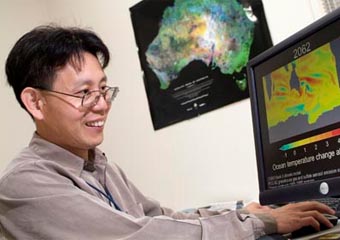
CSIRO Climate Scientist, Dr. Wenju Cai, Talks To Asian Scientist Magazine
We interview Dr. Wenju Cai, an ocean climate researcher at the CSIRO Marine and Atmospheric Research in Australia.

Asian Scientist Magazine Interviews MIT Picower Director, Dr. Li-Huei Tsai
Prof. Li-Huei Tsai, Director of the Picower Institute of Memory and Learning, shares with us her journey as a scientist.

A Chat With A*STAR Chief Scientist, Professor Sir David Lane – Part I
Asian Scientist Magazine catches up with A*STAR's chief scientist, Prof. Sir David Lane, to discuss his recent win of the 2012 Cancer Research UK Lifetime Achievement Award.

AIDS Research Pioneer David Ho Talks To Asian Scientist Magazine
U.S. Presidential Citizens Medal recipient Dr. David Ho talks to Asian Scientist Magazine about his research on HIV vaccines, the China AIDS Initiative, and his thoughts on R&D in Asia.

BGI: The Kung Fu Panda Of The Genomic World
BGI Executive Director Dr. Wang Jun explains to Asian Scientist Magazine why the kung fu panda best describes the Chinese world leader in human, plant, and animal genetics research.

Paving The Way For Life On Land
Scientists have identified the genes which could have enabled the first plants to conquer the terrestrial environment.
Three Scientists Awarded Wagner-Torizuka Fellowship
Three Japanese scientists have been awarded the 2014-2016 Wagner-Torizuka Fellowship worth US$48,000 each.

Uncovering Glaucoma’s Genetic Roots
Scientists have pinpointed new genetic regions linked to glaucoma which could improve the diagnosis and treatment of the disease.