


The Asian Scientist 100
Lu Ke

Institution
Chinese Academy of Sciences
Country
China
Field
Materials Sciences
Lu is the winner of the 2020 Future Science Prize (Physical Science Prize) for discovering and synthesizing a superior nanotwinned structure and gradient nanostructure.
(Photo: Future Science Prize)
AWARDS
- Future Science Prize 2020
Related articles

Inviragen Advances Dengue Vaccine Into Second Stage Of Phase II Study
Inviragen, Inc. has initiated the second stage of an ongoing Phase II study of DENVax™, its investigational dengue vaccine.

Sanofi Pasteur Concludes Phase III Trial For Dengue Vaccine
The Phase III trial, which enrolled more than 10,000 children in Asia, showed that vaccination led to a 56 percent reduction in dengue cases.
Mast Cells Detect And Defend Against The Dengue Virus, Study
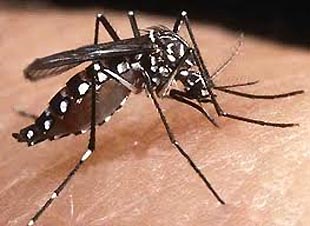
Mast cells, which can help the body respond to bacteria and pathogens, also detect viruses delivered by a mosquito bite, says a new study.

Scientists Introduce “Trojan Horse” Bacteria Into Aedes Mosquito
The spread of dengue fever in northern Australia may be controlled by introducing a bacterium into the Aedes mosquito population, researchers say.

Sri Lanka: Action Against Dengue Beginning To Pay Off
Sri Lanka is making progress in the battle against mosquito-borne dengue fever, say health officials.
Living With Dirty Water In Indonesia
Heavy pollution of river water by household and industrial waste in West Java is threatening the health of at least five million people living on the riverbanks, say experts.

Veredus’ Lab-On-A-Chip Detects Tropical Disease Infections
Veredus has launched a lab-on-a-chip that can identify 13 different major tropical diseases from a single blood sample.

Record Dengue Season Predicted In Thailand
With more than 40 deaths and almost 40,000 cases of dengue fever reported in Thailand so far this year, health experts are warning this could be the largest-ever epidemic.

New Insights From Tracking Dengue Incidence In Thailand
Researchers tracking the incidence of dengue fever in Thailand over a period of almost 40 years have uncovered new insights about the disease.