


The Asian Scientist 100
Lu Ke

Institution
Chinese Academy of Sciences
Country
China
Field
Materials Sciences
Lu is the winner of the 2020 Future Science Prize (Physical Science Prize) for discovering and synthesizing a superior nanotwinned structure and gradient nanostructure.
(Photo: Future Science Prize)
AWARDS
- Future Science Prize 2020
Related articles

The Song Of The Songbird
To aid in song learning, specific neurons in the brains of young zebra finches respond to their father’s singing.

Citizen Scientists Find Rare Galaxy Cluster
While poring over telescope images, two volunteers in an international citizen science project found a rare galaxy cluster, which was later named after them.

Children With Supportive & Attentive Parents Turn Out Better: Survey
Japanese children who receive positive attention and care from their parents have high incomes, high happiness levels, academic success, and a strong sense of morality in adulthood.
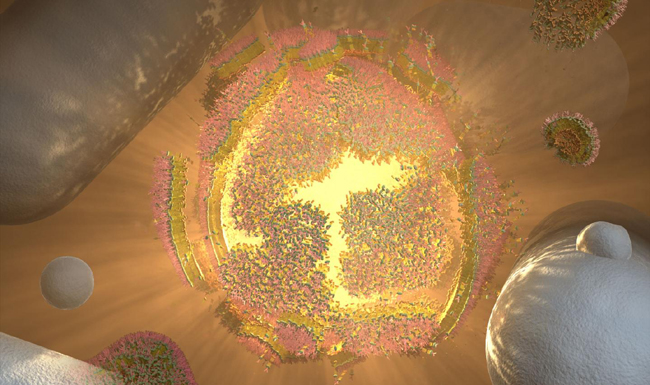
Bacteria Attack With ‘Suicide Bombers’ (VIDEO)
Bacterial cells can quickly change from rod- to round-shaped and then explode, releasing cellular content into the surrounding environment to wreak more havoc.

Macrophages, The Little Helpers That Heal Broken Blood Vessels (VIDEO)
Macrophages can grab the broken ends of a ruptured blood vessel in the brain and ‘stick’ them back together, helping them heal faster.

The Women Of The Asian Scientist 100 (VIDEO)
From the co-discoverer of carbon nanotubes to the first Chinese woman to win a Nobel Prize, here are the 15 female scientists featured on the AS100 list.

8 Scientists From The Philippines To Watch (VIDEO)
These eight individuals from various fields and industries are working towards solving real-life problems that many Filipinos face.

Element 113 Named ‘Nihonium’ In Honor Of Japan (VIDEO)
The first element to be discovered by an Asian team will likely be named nihonium, with the symbol Nh—a tribute to the researchers’ native Japan.

Bilingual Babies Learn Languages Faster (VIDEO)
Contrary to widely held beliefs, babies are not hindered by learning two languages—in fact, they learn both languages faster than monolingual babies.