


The Asian Scientist 100
Lu Ke

Institution
Chinese Academy of Sciences
Country
China
Field
Materials Sciences
Lu is the winner of the 2020 Future Science Prize (Physical Science Prize) for discovering and synthesizing a superior nanotwinned structure and gradient nanostructure.
(Photo: Future Science Prize)
AWARDS
- Future Science Prize 2020
Related articles
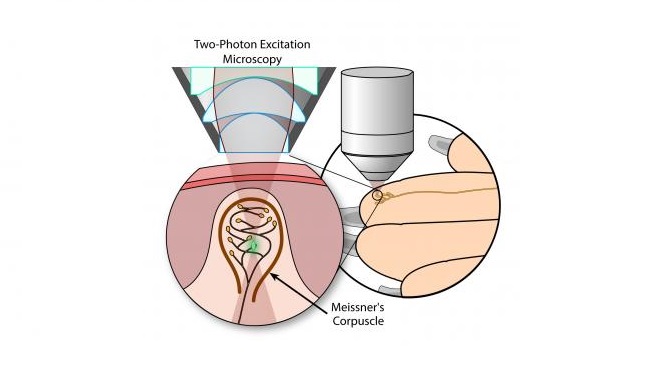
Time-Lapse Observation Of Sensory Receptors In Living Skin
Using two-photon imaging, researchers in Japan have observed the activity of mechanoreceptors in the fingertips of live mice.

Mola Mola’s Genome May Explain Its Gigantic Size
Researchers have sequenced the genome of the ocean sunfish, focusing particularly on growth hormone signalling genes to understand its freakish growth spurts.

Fighting Leukemia Cells By Cutting Off Their Oxygen Source
Researchers have identified the signaling pathway that enables leukemia cells to maintain their oxygen-dependent energy metabolism and ability to divide.

Some Immune Receptors Are More Equal Than Others
Although all receptors in a single T-cell are genetically and biochemically identical, they are not functionally identical, according to a study.
Lucky Them! Scientists Sequence The Clover Genome
Australian scientists have decoded the genome of the subterranean clover, which is the most important annual pasture legume in Australia.

Telehealth In Australia Could Save Health System US$2.29 Billion: Report
In-home monitoring of ailing aged could save Australia's healthcare system billions of dollars, finds the country's first large-scale trial of telehealth systems.

International Genomics Project Recognized At 2016 Eureka Awards
The FATHOM5 project, which involves the large scale genomic sequencing of human cells, was recently announced a winner at Australia's Eureka Awards.

16 Scientists From China To Watch
The Asian superpower is boosting basic research funding in its 13th five-year plan—a boon for this list of scientists and the wider R&D community.
Ants Could Be Influencing The Colors Of Their Aphid Allies
The differences in coloring within an aphid colony may depend upon aphids’ interactions with their ant allies rather than with their predators, according to researchers.