


The Asian Scientist 100
Lu Ke
Institution
Chinese Academy of Sciences
Country
China
Field
Materials Sciences
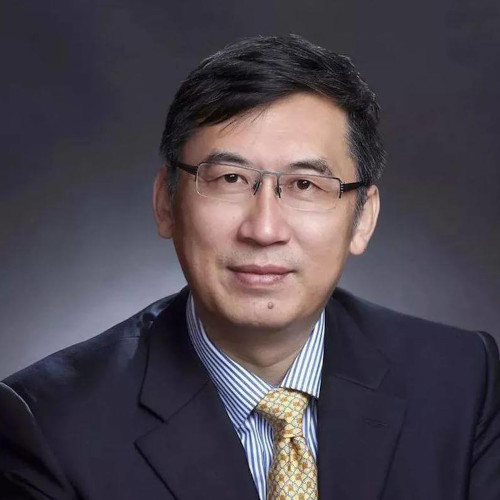
Lu is the winner of the 2020 Future Science Prize (Physical Science Prize) for discovering and synthesizing a superior nanotwinned structure and gradient nanostructure.
(Photo: Future Science Prize)
AWARDS
- Future Science Prize 2020
Related articles

Announcing Asia’s Premier Science Writing Competition
Science Centre Singapore and Asian Scientist Magazine have launched a competition to honor the best science writers in Asia.

Asia’s Rising Scientists: Peipei Setoh
Are babies a tabula rasa or do they have an inbuilt moral compass? Peipei Setoh, an assistant professor at NTU hopes to find out.

Experience The Glorious, Messy Insides Of The Human Body
Instead of turning to Wikipedia, why not take a trip to the Human Body Experience at the Science Center Singapore to answer all those burning questions about how the body works?
Nobel Laureates Get Playful At Sketches Of Science Exhibition
"Playfulness is an absolute key component for real discovery," said Nobel Laureate Sir Tim Hunt at a new exhibition that showcases ingenious sketches by 50 Laureates.

Yoshinori Ohsumi To Receive Japan’s Order Of Culture
Professor Yoshinori Ohsumi is the 385th person to be awarded the Order of Culture, Japan's highest cultural honor.

Health Risks Loom As Fast Food Sales Increase In Asia
The huge growth in sales of fast food and drinks has major health implications for people in Asia, researchers say.

Sugar-Coated Catalysts That Work In Live Mice
Carbohydrate structures called glycans could help researchers send metal catalysts to specific tissues without the need for time-consuming antibody development.

Seeing The World Through Fresh (Zebrafish) Eyes
Using imaging and bioengineering techniques, scientists were able to observe how the eyes develop in live zebrafish embryos.

Could A Pill Be Used To Rebuild The Liver? (VIDEO)
Researchers have discovered a small molecule inhibitor that promotes liver tissue regeneration, which may pave the way for medicines that help to rebuild organs.