


The Asian Scientist 100
Lu Ke

Institution
Chinese Academy of Sciences
Country
China
Field
Materials Sciences
Lu is the winner of the 2020 Future Science Prize (Physical Science Prize) for discovering and synthesizing a superior nanotwinned structure and gradient nanostructure.
(Photo: Future Science Prize)
AWARDS
- Future Science Prize 2020
Related articles

Can Innovation Solve Asia’s Most Pressing Challenges?
Asia's emerging economies face serious infrastructural challenges, among others. What role does innovation play in addressing these issues?
Putting His Insignia On The Southeast Asian Tech Startup Scene
An exclusive interview with Tan Yinglan, founding managing partner of Insignia Ventures Partners and ex-Sequoia venture capitalist, on closing his most recent US$120 million funding round.

Generating Electricity From Temperature Fluctuations
Scientists in Japan have devised a thermoelectric battery that can convert heat into electricity even with a shallow temperature gradient.

Epigenetics Explains Why Some Ants Prefer Diet Soda
Scientists in Japan have discovered that genetically identical ants vary in their threshold for sweetness, with implications on colony survival.

Termite’s Complex Gut Microbiome Sequenced
Researchers have sequenced the genomes of the bacteria living in the guts of termites, shedding light on how they enable termites to digest wood.

Why Asians Are More Susceptible To Severe Dengue
Genetics makes Asians susceptible to dengue shock syndrome, according to a study by an international team of scientists.

Making Gene Editing More Precise
Scientists at Osaka University in Japan have developed a modified Cas9 enzyme that greatly suppresses the rate of unintended genetic mutation compared to conventional methods.

Asia’s Scientific Trailblazers: Michael Lai Ming-Chiao
A pioneer in coronavirus research, Michael Lai Ming-Chiao shares how a detour in his academic journey brought him to the battlefront of the SARS outbreak.
Tilted Rotors Make Drones More Stable
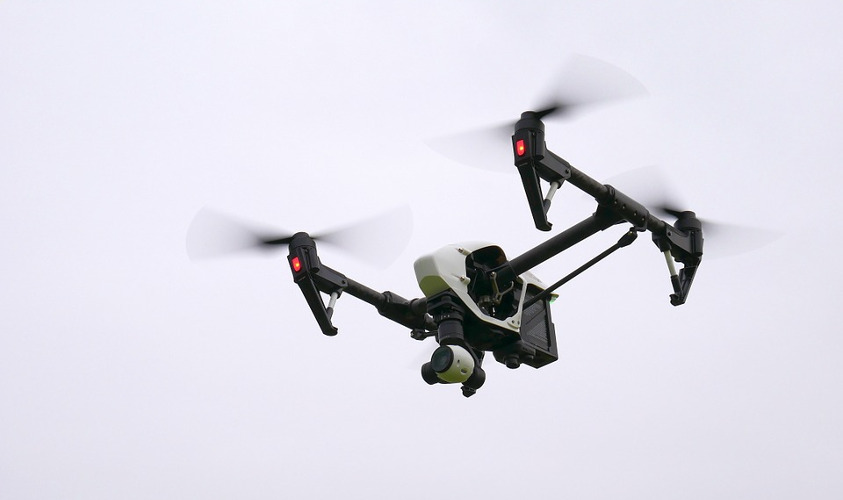
Researchers in Japan have demonstrated that the stability of unmanned aerial vehicles in heavy winds can be improved by angling the rotors of drones outwards by 20 degrees.