


The Asian Scientist 100
Lu Ke

Institution
Chinese Academy of Sciences
Country
China
Field
Materials Sciences
Lu is the winner of the 2020 Future Science Prize (Physical Science Prize) for discovering and synthesizing a superior nanotwinned structure and gradient nanostructure.
(Photo: Future Science Prize)
AWARDS
- Future Science Prize 2020
Related articles

Chang’e-4 Makes Historic Landing On Far Side Of Moon
In a world's first, China lands its lunar probe Chang'e-4 on the far side of the moon.
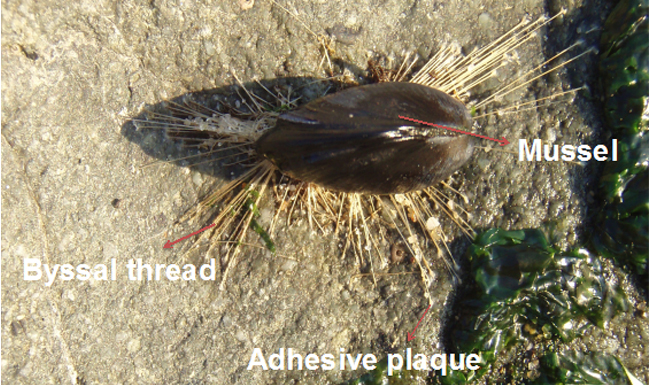
Hybrid Protein Adhesive Flexes Its Mussel
The mussel's incredible ability to adhere to surfaces has inspired a biologically active molecule that can tightly bind to titanium, which is commonly used in medical implants.

A Slippery Solution To A Sticky Problem
By infusing porous surfaces with slippery liquids, researchers have developed a way to prevent mussel adhesion, a key contributor to marine biofouling of ship hulls.

CAS Professor Awarded 2016 Nikkei Asia Prize
Professor Jiang Lei, director of the Technical Institute of Physics and Chemistry at the Chinese Academy of Sciences, has been awarded the 2016 Nikkei Asia Prize.
Synthetic Mother-Of-Pearl, The Way Nature Intended
Researchers have created synthetic nacre, or mother-of-pearl, that forms in mere weeks instead of months or years.

Octopus-Inspired Adhesive Pads Are Suckers For Transfer Printing
Researchers have designed adhesive pads that mimic the suckers on octopus tentacles.
Ten Materials Inspired By Mother Nature (VIDEO)
The natural world is filled with strange, fascinating structures that are stronger, more flexible and more resilient than anything humans can make.

Sticky Situations A Boon For Polymer Science
Researchers in Japan have found a way to make industrial polymers sticky without the use of glue or other binding substances.

Flu Vaccine Effective In The Elderly, Study Finds
A research group in Singapore has demonstrated that the flu vaccine induces a strong protective immune response in the elderly.