


The Asian Scientist 100
Lu Ke

Institution
Chinese Academy of Sciences
Country
China
Field
Materials Sciences
Lu is the winner of the 2020 Future Science Prize (Physical Science Prize) for discovering and synthesizing a superior nanotwinned structure and gradient nanostructure.
(Photo: Future Science Prize)
AWARDS
- Future Science Prize 2020
Related articles

Taiwan Semiconductor Pioneer Wins 2012 IEEE Frederik Philips Award
A Taiwanese physicist, Dr. Chih-Yuan Lu, has been selected to receive the 2012 IEEE Frederik Philips Award by the Institute of Electrical and Electronics Engineers (IEEE).

Stem Cell Pioneer Shinya Yamanaka Shares 2012 Nobel Prize In Medicine
Japanese stem cell scientist Shinya Yamanaka and John B. Gurdon of the U.K. have won the Nobel Prize in Physiology or Medicine 2012.

Making Sense Of Highly Complex Data
A new method developed by SMU researchers allows for more accurate estimations that take hundreds of variables into account.

Bai Chunli To Lead The Chinese Academy Of Sciences
Prof. BAI Chunli (白春礼), a chemist and nanoscientist by training, has been appointed as president of the Chinese Academy of Sciences (CAS).

Do Babies Have An Inbuilt Moral Compass? Scientist To Find Out
A new research program on early childhood learning in Singapore aims to study how children deal with conflicting moral principles such as fairness versus in-group loyalty.

A Mozzie That Breeds Without Blood
A secretive and exotic species of mosquito, found across much of Australia, has revealed a new twist on the insect's famous 'blood-sucking' reputation.
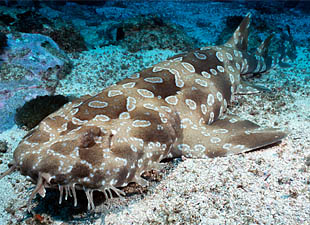
Australian Study Reveals Sharks Are Color Blind
Researchers in Australia have shown that carpet sharks are probably completely color blind.

Sea Urchin’s Spiny Strength Linked To Calcite Crystals
Australian engineers have modeled the microscopic mechanics of a sea urchin’s spine, gaining insight into how these creatures withstand impacts in their aquatic environment.

Too Much Housework Cuts Lifespan Of Female Komodo Dragons By Half
Researchers have found that female Komodo Dragons live half as long as males on average, seemingly due to their nest-building and egg-guarding duties.