


The Asian Scientist 100
Long Ran

Institution
University of Science and Technology of China
Country
China
Field
Chemistry
Long won the 2017 L’Oréal UNESCO For Women in Science International Rising Talent award for her research on photocatalysts for carbon dioxide reduction.
(Photo: L’oréal Foundation)
AWARDS
- 2017 LOréal-UNESCO For Women in Science International Rising Talent Award
Related articles

Earliest Primate Skeleton And ‘Cousin’ Of Human Ancestor Discovered In China
An international team of paleontologists has discovered a nearly complete, articulated skeleton of a tiny tree-dwelling primate in China.

Study Shows That Daily Sunscreen Use Prevents Skin Aging
An Australian study has revealed that daily use of broad spectrum sunscreen slows down the aging process of skin, as well as preventing skin cancer.

Fujifilm & Dr. Reddy’s Call Off Generic Drugs Joint Venture In Japan
FUJIFILM and Dr. Reddy's Laboratories have terminated an MOU to enter into a joint venture for the Japanese generics drugs market.

World First Hand, Foot And Mouth Vaccine Developed
Chinese researchers have developed the world's first ever vaccine against a strain of enterovirus that can cause hand, foot and mouth disease,

EBOS Group Limited Acquires Australian Pharma Distributor, Symbion
EBOS Group Limited announced this week details of a NZ$1.1 billion acquisition of Australia's Symbion.
Amgen & Astellas Enter Into Japan Alliance
Amgen and Astellas Pharma Inc. today announced a strategic alliance to co-develop and co-commercialize new medicines in Japan.

Agilent, University Of Rouen, A*STAR To Collaborate In Glycomics
Agilent, the University of Rouen, and A*STAR have signed an MOU to develop tools to effectively analyze biologics and vaccines.
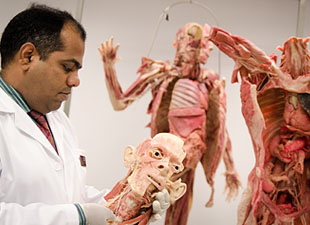
NTU Medical School To Use Plastinated Human Bodies Instead Of Cadavers
Nanyang Technological University's new medical school will be pioneering the use of plastinated bodies for its anatomy classes.

Is The Asian Space Science Drive Harming Development?
Are the large sums of money invested into building prestigious space programs diverting funding from key areas such as health and education?