


The Asian Scientist 100
Hei Ming Lai
Institution
The Chinese University of Hong Kong
Country
Hong Kong
Field
Biomedical Sciences
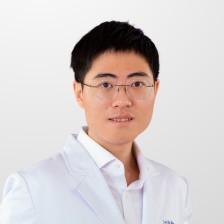
Lai won the 2024 Croucher Tak Wah Mak Innovation Award for leading research in creating a 3D spatial multi-omics platform for clinical diagnostics and spatial biology research.
(Photo: The Chinese University of Hong Kong)
AWARDS
- 2024 Croucher Tak Wah Mak Innovation Award
Related articles

Forming New Neurons With Help From Gut Microbes
According to scientists, gut microbes that metabolize tryptophan release molecules that stimulate the production of new neurons in the adult brain.

Finding Peace Among The (Vertical) Plants
Need to relax? Looking at vertical greenery might just do the trick, say scientists from Singapore.

Keeping Singapore Cool
With global warming at our doorstep, researchers in Singapore are leveraging supercomputers to tackle the complex challenge of urban heat.

Sweeping Up Space Junk (VIDEO)
By clearing out space debris, Astroscale is securing a safe and sustainable future for space development efforts, says CIO Ai Makino.

Redefining Asian Science
As the world’s economic and scientific epicenters shift to Asia, the impact of the region's rich cultural heritage on research and development is becoming more apparent.

Wealth Gap Drives Global Wildlife Trade, Study Says
Wealth inequality is a key driver of global wildlife trade, with higher-income countries being the top consumers of wildlife products.

Painting The Rainbow With Engineered Bacteria
Using metabolic and membrane engineering, South Korean scientists produced seven natural rainbow colorants from engineered E. coli bacteria.
Meet The Magnet-Controlled Miniature Robots
Measuring the size of a grain of rice, these new miniature robots can move across three dimensions with the help of magnetic fields.

Tracing East Asia’s Ancient Coronavirus Epidemic
Our DNA holds traces of an ancient battle between our cells and a coronavirus, suggesting that an epidemic similar to COVID-19 struck East Asia about 20,000 years ago.