


The Asian Scientist 100
Hei Ming Lai

Institution
The Chinese University of Hong Kong
Country
Hong Kong
Field
Biomedical Sciences
Lai won the 2024 Croucher Tak Wah Mak Innovation Award for leading research in creating a 3D spatial multi-omics platform for clinical diagnostics and spatial biology research.
(Photo: The Chinese University of Hong Kong)
AWARDS
- 2024 Croucher Tak Wah Mak Innovation Award
Related articles

Chia-Chiao Lin, MIT Institute Professor Emeritus, Has Died At 96
Chia-Chiao Lin, an Institute Professor Emeritus at MIT who played a pivotal role in the development of applied mathematics both in the United States and in China, died Sunday in Beijing.
Asia Responsible For Half Of Toxic Mercury Release: UNEP
Asia is the largest regional emitter of mercury in the world, says a new report released by the United Nations Environment Program.
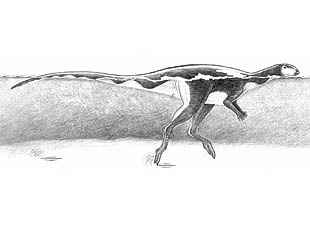
Australia’s Stampeding Dinosaurs Go For A Swim
Paleontologists have discovered that the world's only recorded dinosaur stampede is largely made up of the tracks of swimming rather than running animals.
Golden Rice Trial Triggers Sackings, Investigation
Three Chinese researchers were fired after they co-published a study in which 24 schoolchildren in China's Hunan province were fed GM rice in 2008.

Teaching Children To Read Through Phonics May Be Disadvantageous In The Long Term
Researchers have found that children learn to read primarily by storing words in the brain and suggest that teaching children to read through phonics may be disadvantageous to them later in life.

Singapore Launches Asia’s First Aquatic Science Center
Singapore’s Aquatic Science Center (ASC), the first of its kind in Asia, was officially opened on Wednesday.

Potato Genome Offers Hope For Improving Crop Yield In Asia
Scientists have sequenced and analyzed the potato genome, paving the way for new varieties that are disease-resistant and high-yielding.

International Students To Face Tougher Visa Restrictions In The UK
The UK Home Office announced today scores of reforms to the student visas system aimed at reducing misuse of the system.
Species Affected By Climate Change: To Move Or Not To Move?
Researchers have developed a decision framework to decide whether to move species that face climate change.