


The Asian Scientist 100
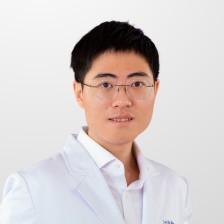
Hei Ming Lai
Institution
The Chinese University of Hong Kong
Country
Hong Kong
Field
Biomedical Sciences
Lai won the 2024 Croucher Tak Wah Mak Innovation Award for leading research in creating a 3D spatial multi-omics platform for clinical diagnostics and spatial biology research.
(Photo: The Chinese University of Hong Kong)
AWARDS
- 2024 Croucher Tak Wah Mak Innovation Award
Related articles

Asia’s Scientific Trailblazers: Ashok Venkitaraman
Having discovered BRCA2’s crucial role in genome stability, Professor Ashok Venkitaraman continues to drive research into cancer detection and treatment at the Cancer Science Institute of Singapore and A*STAR.

Dreeming Up A Better Rested World
With their sleep monitoring technology, the sleep science pioneers at Dreem intend to leverage new telehealth trends that have emerged amid the COVID-19 pandemic.

Asia’s Rising Scientists: Ian Vega
By investigating the gravitational phenomena governing the Universe, Professor Ian Vega and his team are expanding the horizons of physics research in the Philippines.

Carving A Niche–Interview With Jacqueline Chen Of Nordic Innovation House Singapore
Nordic Innovation House Singapore taps into its vast network of partners to offer Nordic businesses a leg up as they work to enter the Southeast Asian market.

Pivoting To The Pulse Of Innovation
IPI’s futurepulse podcast discusses with business leaders how companies can remain at the forefront of technology trends and innovation.
Asian Scientist Magazine’s 2021 Roundup
Here are 10 of Asian Scientist Magazine’s top stories in 2021, highlighting scientific advances in diverse domains from COVID-19 to climate change.

A Healthy Helping Of Innovation
With over 30 years of experience in Asia’s healthcare sector, IPI Innovation Advisor Ramachandran Rajamanickam is passionate about helping local SMEs navigate the industry.

The Cost Of Disturbed Circadian Rhythms
Researchers from India have shown that long-term circadian rhythm disruption causes Alzheimer's-like symptoms in rats.
Laying The Foundation For A Resilient Asia
Tapping Asia’s growing expertise in disaster risk communication, the Understanding Risk Asia 2021 conference explored how building trust is vital to building resilient communities.