


The Asian Scientist 100
Hei Ming Lai

Institution
The Chinese University of Hong Kong
Country
Hong Kong
Field
Biomedical Sciences
Lai won the 2024 Croucher Tak Wah Mak Innovation Award for leading research in creating a 3D spatial multi-omics platform for clinical diagnostics and spatial biology research.
(Photo: The Chinese University of Hong Kong)
AWARDS
- 2024 Croucher Tak Wah Mak Innovation Award
Related articles

The Hum Or Bursts Of Purkinje Cells
The two different states of Purkinje cell signaling could be related to how the cell decides to respond to incoming signals, scientists say.

Keeping The Circadian Clock Stable, Whatever The Temperature
Scientists have proposed a phosphoswitch mechanism to explain the stability of the key circadian protein PER2 in the face of fluctuating temperatures.

Publish Or Perish Culture Encourages Scientists To Cut Corners
Sadly, the intense pressure of academic research drives some scientists to breach ethical codes. What can be done about it?

Predicting Which Combinations Will Yield Metallic Glass
An understanding of the molecular structure could help scientists predict which alloys will result in metallic glasses.

Yoshinori Ohsumi Wins 2015 International Prize For Biology
Professor Yoshinori Ohsumi is the sixth Japanese person the receive the International Prize for Biology since its inception in 1985.

Tuning Carbon Nanotubes To Capture Greenhouse Gases
By tweaking the physical parameters of carbon nanotubes, researchers were able to increase the absorption of greenhouse gases.
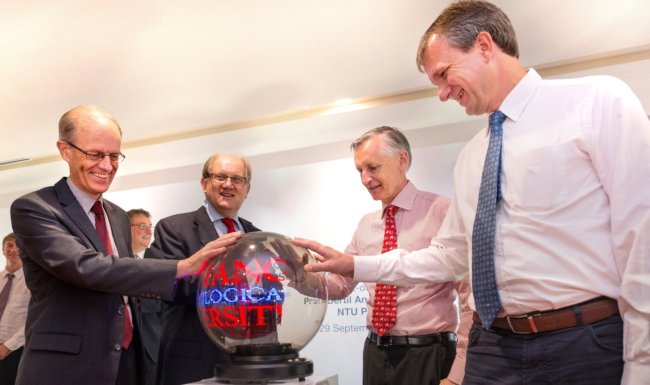
Helping Singaporeans Stay NIMBELS Through Research
The NTU Integrated Medical, Biological & Environmental Life Sciences (NIMBELS) Cluster features Southeast Asia’s first phenome center.

India Launches Its First Astronomy Satellite
The launch of India's first astronomy satellite with the capacity to simultaneously image light at various wavelengths presents an unprecedented opportunity to observe space.

A Thermal Invisibility Cloak
A new thermal invisibility cloak, which actively redirects heat, may bring Harry Potter's invisibility cloak closer to reality.