


The Asian Scientist 100
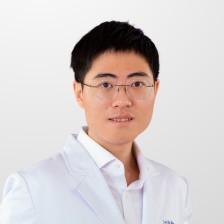
Hei Ming Lai
Institution
The Chinese University of Hong Kong
Country
Hong Kong
Field
Biomedical Sciences
Lai won the 2024 Croucher Tak Wah Mak Innovation Award for leading research in creating a 3D spatial multi-omics platform for clinical diagnostics and spatial biology research.
(Photo: The Chinese University of Hong Kong)
AWARDS
- 2024 Croucher Tak Wah Mak Innovation Award
Related articles

7 Must-Read Stories In November 2016
Gut-inspired batteries, dengue vaccines and future-proof jobs were popular reads last month.

Scientists Create Blood Cells From Skin Cells Of Mice
The artificial, skin-derived blood cells could last for multiple months in mice.

It’s The End Of The World As We Know It, So Why Talk About Science?
The shock US election results have thrown into the spotlight the need, more than ever, for science literacy.

Turning Sugarcane Waste into Light
Indian researchers have developed a method to transform bagasse, or sugarcane waste, into highly fluorescent carbon quantum dots.

Mystery Solved: How Saturn Got Its Rings
A study suggests that the rings of giant planets like Saturn are natural byproducts of the planet formation process.

What Makes Memories Hyper Emotional
Researchers in Japan have identified a brain circuit that restrains the brain's over-responsiveness to expected but unpleasant stimuli.

‘Silent’ Mutation Could Put You At Heart Failure Risk
Seemingly healthy individuals could be primed for heart failure if they carry this common mutation.

Dolphins Inspire Leaping, Swimming Robot
Researchers have built a fast and agile robotic dolphin that can be used to investigate water quality.
Peptides Bridge The Artificial And Biological
Genetically engineered peptides that can bridge the gap between synthetic materials and biomolecules could be used for ‘seamless’ bioelectronic devices.