


The Asian Scientist 100
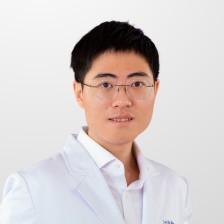
Hei Ming Lai
Institution
The Chinese University of Hong Kong
Country
Hong Kong
Field
Biomedical Sciences
Lai won the 2024 Croucher Tak Wah Mak Innovation Award for leading research in creating a 3D spatial multi-omics platform for clinical diagnostics and spatial biology research.
(Photo: The Chinese University of Hong Kong)
AWARDS
- 2024 Croucher Tak Wah Mak Innovation Award
Related articles

What Humanoids Can Teach Us About Being Human
Why design a robot version of yourself? Asian Scientist Magazine picks the brain of world-leading robotics scientist, Professor Hiroshi Ishiguro, to find out.

The AI Spring Is Coming
Hon Hsiao-Wuen, managing director of Microsoft Research Asia, is excited about AI and robots, and explains why you should be too.

How To Win The Nobel Prize Of Supercomputing
Winning the ACM Gordon Bell Prize in High Performance Computing requires a team effort, says Professor Fu Haohuan, a member of the 12-man team that won the competition in 2016.

When Your Doctor Knows It All
IBM Watson is changing the practice of healthcare in both hospitals and homes with its ability to learn and apply huge volumes of information.

High Performance Healthcare
Thanks to all the data that is already available, the healthcare sector is ripe for a data-driven transformation. Here’s how supercomputers can make a difference.

When T Spells Trouble For Cancer
The world’s largest clinical trial of T-cells for cancer is being conducted by a Singapore-based biotech company, Tessa Therapeutics. Sim Shuzhen finds out more.

AI On Cloud Nine
The convergence of artificial intelligence and cloud computing is underway. Alibaba Cloud’s Dr. Min Wanli shares his insights on this revolution.

WuXi AppTec & Mayo Clinic To Jointly Develop Diagnostics
The collaboration will focus on co-developing new diagnostic tests and offering existing ones to health care providers and patients in China.

The High Returns Of Reconciling Theory And Data
Measures of profitability should ideally be both rooted in theory and backed by empirical data, said Professor John Core, keynote speaker at the SMU SOAR Accounting Symposium 2017.